The guide
A designer's guide to custom window treatments
Pleat styles, linings, roman shades, cornices, mounting and hardware, explained by Patti Ayers, interior designer and owner of the Pillows & Pleats workroom in Waterford, Virginia.
Articles
Draperies · 11 min read
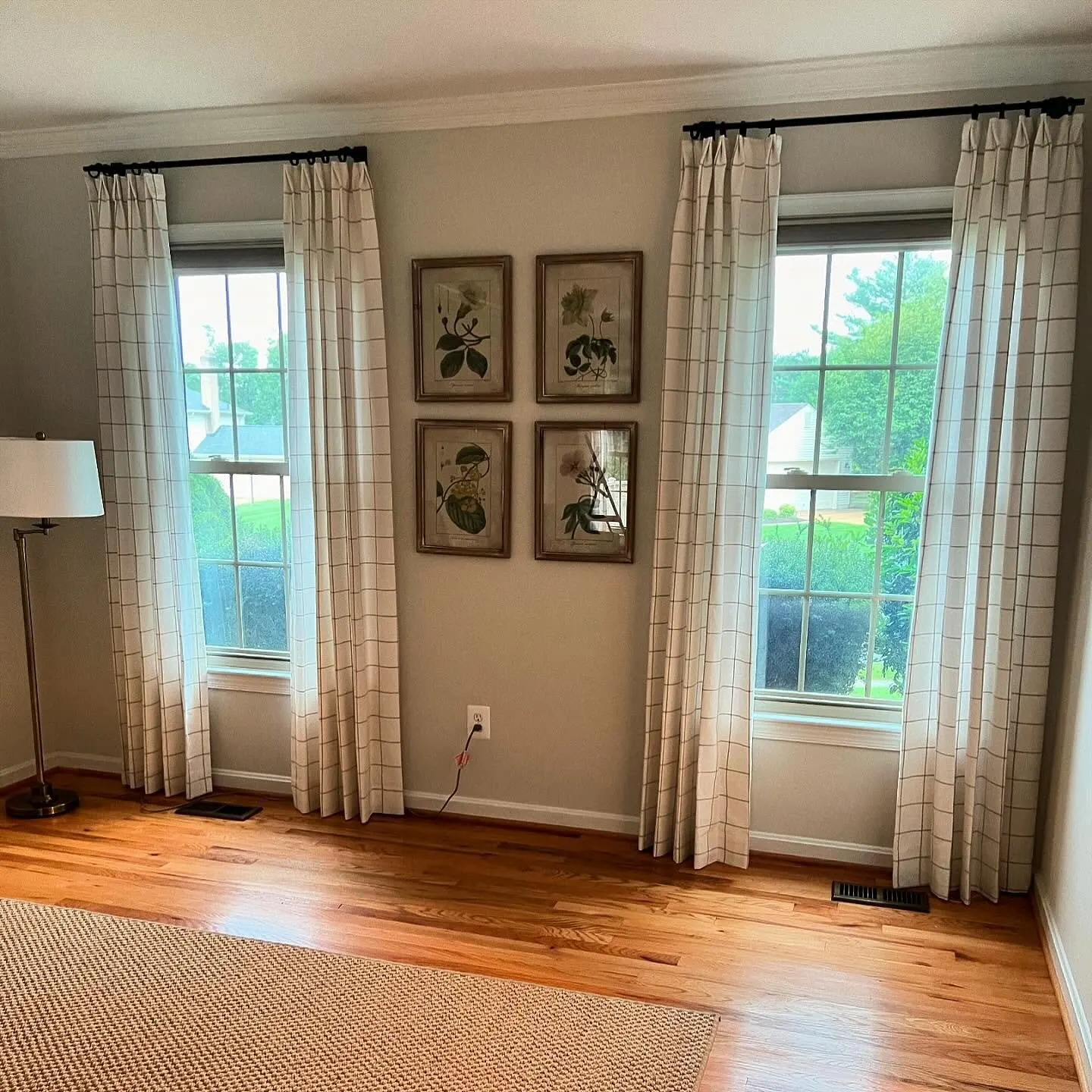
How long should curtains be? A workroom's curtain length guide
Standard curtain lengths, a length chart by ceiling height, float, kiss, break and puddle hems, and how high and wide to hang the rod, from a custom drapery workroom.
Draperies · 10 min read
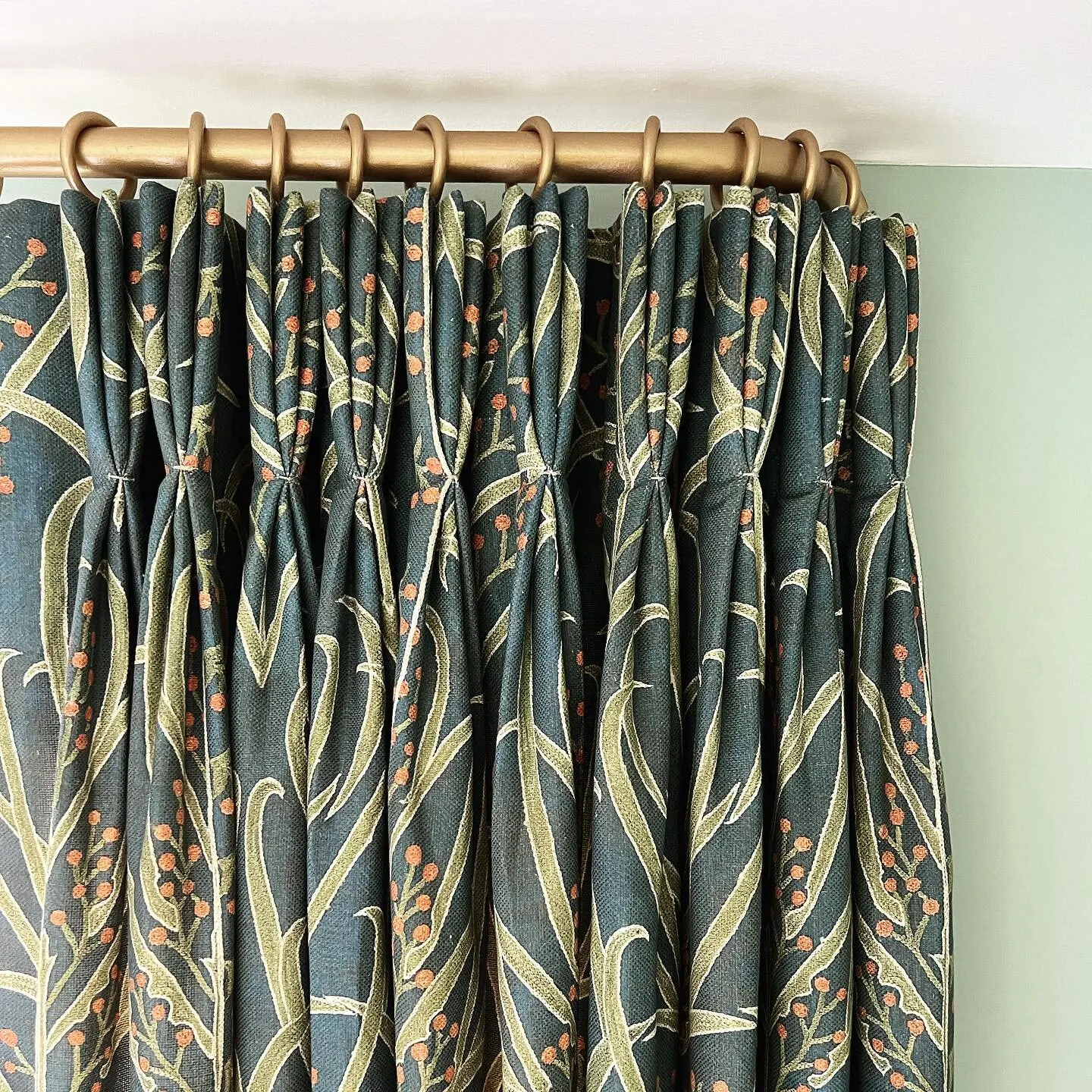
Drapery pleat styles, explained by a workroom
Pinch, French, Euro, inverted, box, goblet, cartridge, ripplefold, pencil, grommet, rod pocket and back tab: how each drapery pleat looks, hangs and opens, and which rooms and fabrics suit it.
Glossary
Drapery pleat styles
The heading, or pleat style, is the finished top of a drapery panel. It determines how the fabric folds, the fullness of the panel, and how formal or relaxed the result feels.
Read: How long should curtains be? A workroom's curtain length guide →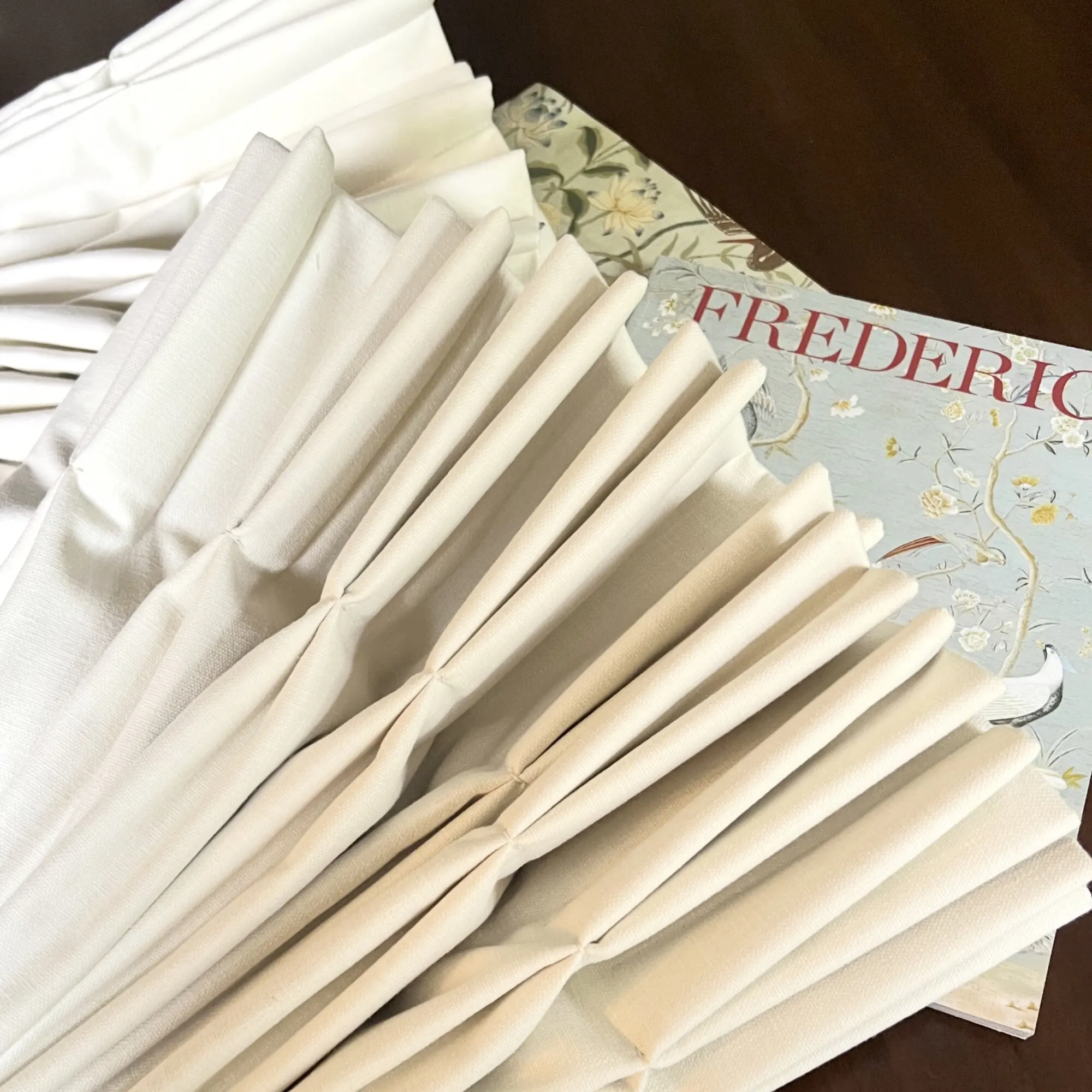
- French Pleat (Pinch Pleat)
- Two or three folds gathered at the base and fanned at the top. The classic, tailored heading for traditional and transitional rooms. The triple French pleat is the fullest and most formal.
- Euro Pleat
- Folds tacked at the very top so they open gracefully toward the hem. A more contemporary expression than the French pleat.
- Inverted Pleat
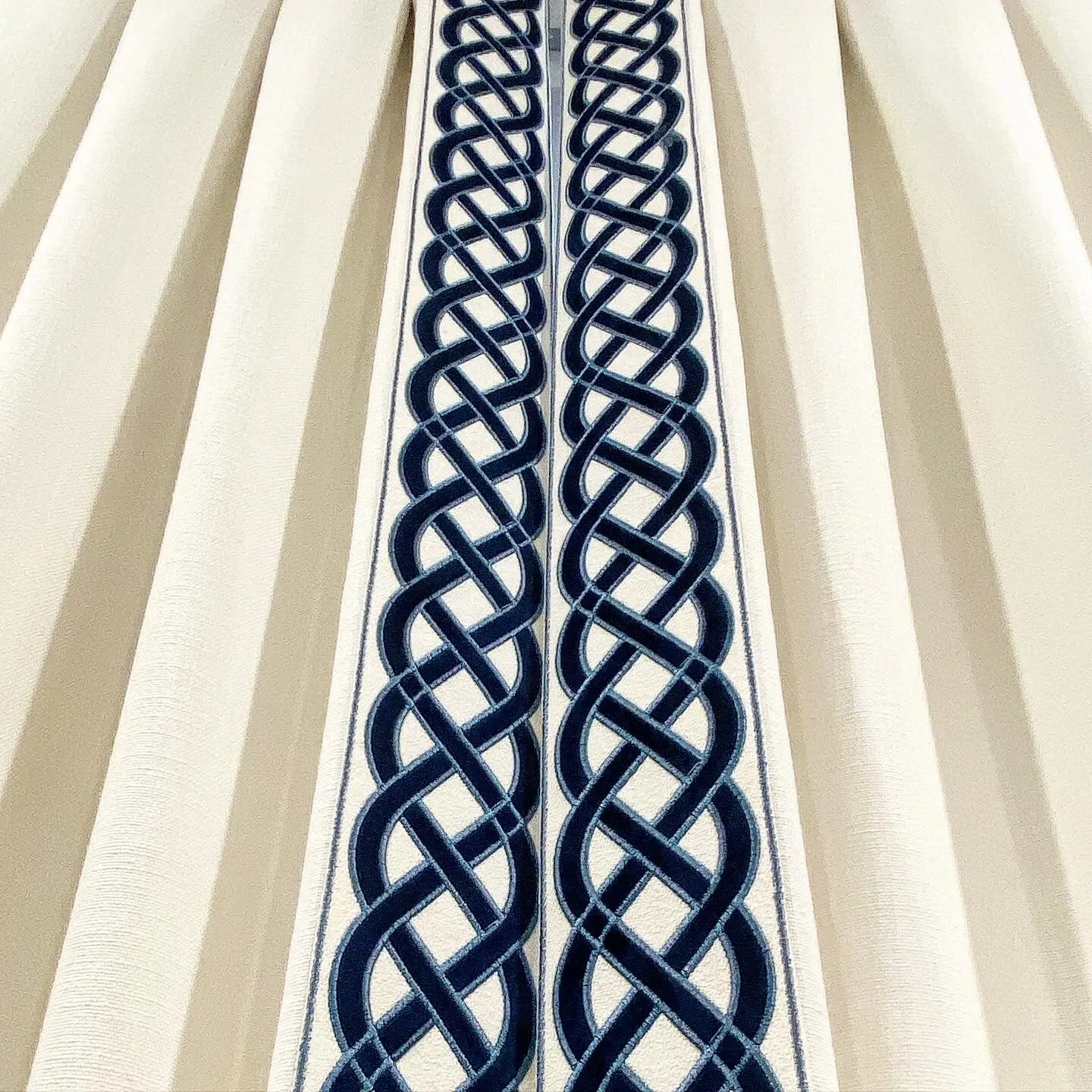
- The fold turns to the back of the panel, leaving a clean, flat face. A favorite for modern rooms and a beautiful way to showcase a leading edge trim.
- Cartridge Pleat
- Rounded, column-like folds, often lightly stuffed to hold their shape. A crisp, architectural rhythm.
- Goblet Pleat
- A cartridge pleat gathered at the base so the top flares like a goblet. Formal and decorative.
- Ripplefold
- Fabric on a track falls in soft, even waves and stacks neatly. Ideal for modern and transitional homes.
- Grommet
- Metal rings set into the heading glide along a rod. A relaxed, easy-to-draw heading for casual spaces.
- Hand-Tacked Pleats
- Each pleat is finished by hand rather than by machine, for softer, more precise folds. A hallmark of true custom drapery.
- Pleated to Pattern
- Pleats are placed so the motif of a printed fabric falls in the same position on every panel, aligning beautifully across the window.
Lining, interlining and blackout
What lies behind the face fabric matters as much as the fabric itself. The choice of lining shapes light, drape and insulation, and how gracefully the fabric endures the sun.
Read: Drapery pleat styles, explained by a workroom →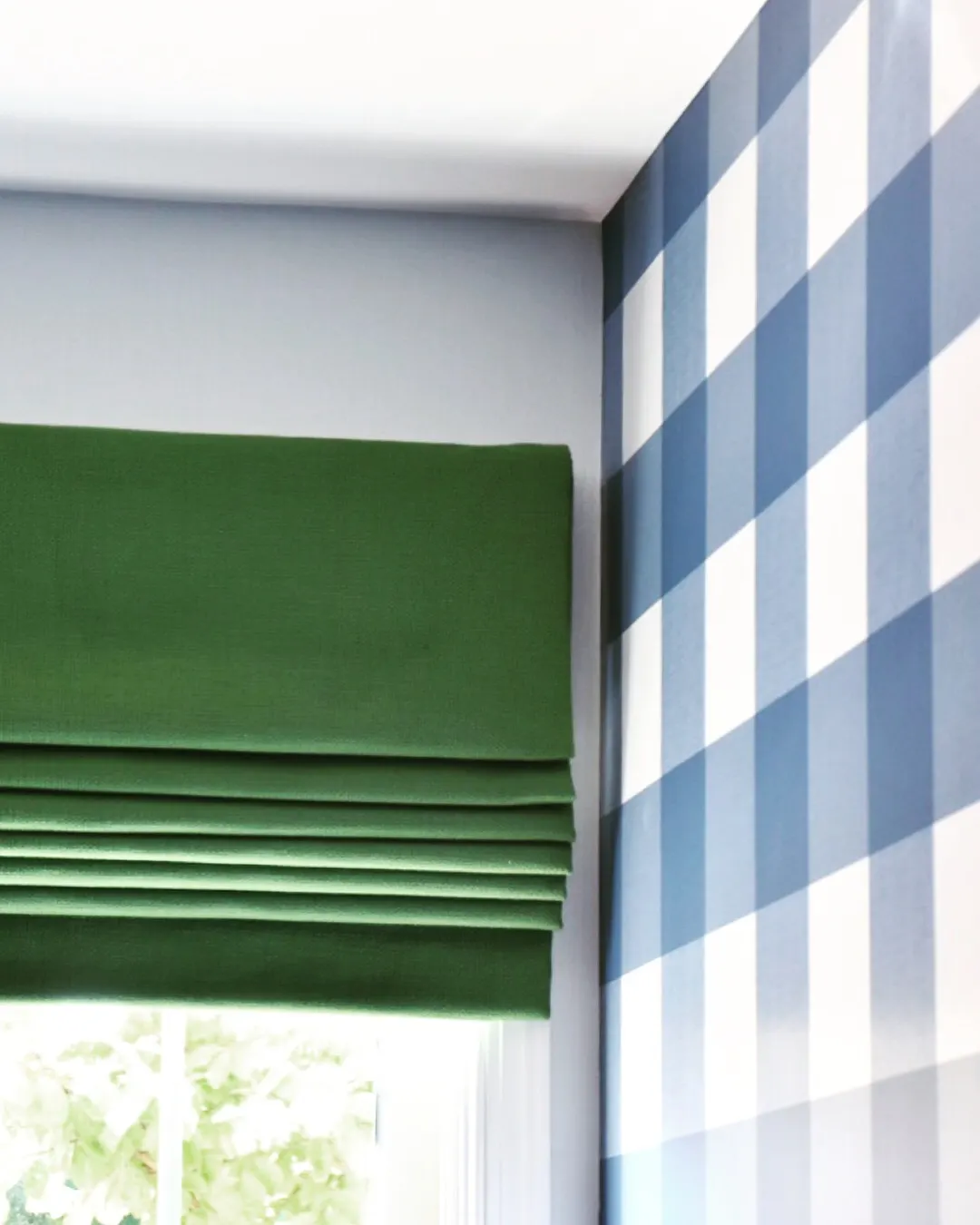
- Premium 100% Cotton Lining
- A fine cotton layer that protects the face fabric from the sun and gives each panel a beautifully finished back.
- 100% Cotton Heavyweight Interlining
- A soft flannel layer, sometimes called bump, sewn between the face fabric and the lining. It lends body, a fuller and more luxurious drape, and insulation. Our choice for formal rooms and for silks and linens.
- Blackout Lining
- A coated lining that blocks most light. Ideal for bedrooms, nurseries and media rooms.
- French Blackout Method
- A layered construction that pairs blackout with interlining, so the panel blocks light while keeping a soft hand, free of the stiff, shiny back of coated blackout alone.
- Light Bleed
- Pinpoints of light that can pass through stitching and folds in blackout treatments. Using the latest fabrication techniques, we eliminate pinholes of light in our blackout roman shades for complete, uninterrupted darkness.
Roman shade styles
A roman shade is a fabric shade that folds into soft pleats as it is raised. It offers the warmth of fabric with the clean lines of a shade.
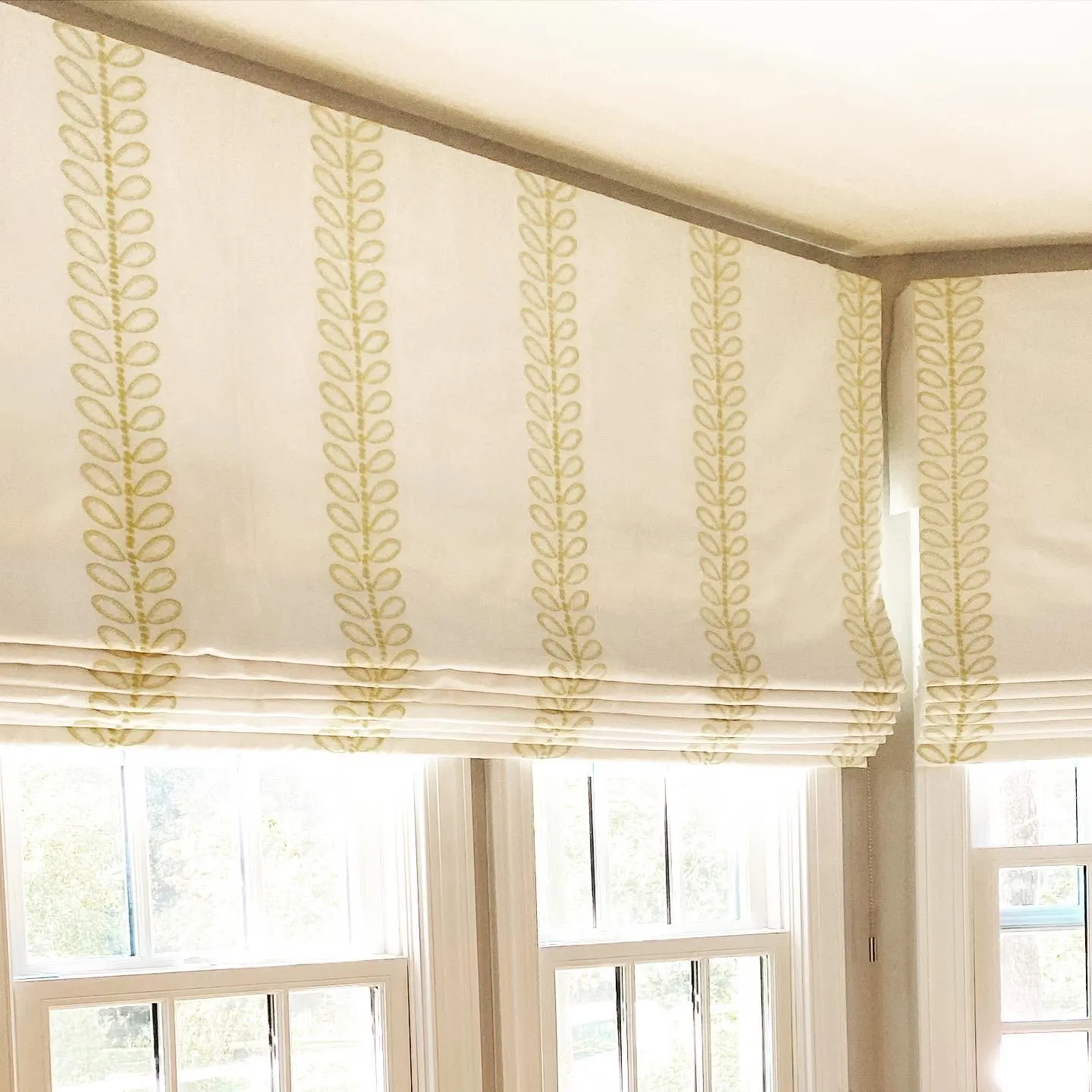
- Flat Roman Shade
- Crisp, even horizontal folds with a straight hem. The finest choice for showcasing a pattern.
- Relaxed Roman Shade
- A gentle curve across the hem when lowered. Soft, casual and collected.
- London Shade
- Soft tails at each side gather into graceful, swag-like folds as the shade is raised.
- Faux (Stationary) Roman
- Tailored to look like a roman shade but fixed in place. Mounted above blinds or shutters to bring softness and pattern to the window.
- Roman Valance
- A short, stationary roman used as a top treatment, a lovely finish for kitchens and breakfast nooks.
- Motorized Roman Shade
- Raised and lowered by a quiet motor using a remote, a schedule or a phone. An elegant solution for tall or hard-to-reach windows.
Cornices, valances and swags
Top treatments complete the window. They conceal hardware and blinds, and they can make a window appear taller or wider.
- Cornice
- A rigid board, padded and upholstered, mounted above the window. Tailored and architectural.
- Soft Cornice
- A cornice with a softer, padded face and a gentler silhouette.
- Box Pleated Valance
- A fabric valance with evenly spaced inverted box pleats. Tailored and traditional.
- Board Mounted Valance
- A lined and often interlined valance fixed to a mounting board for a clean, finished line.
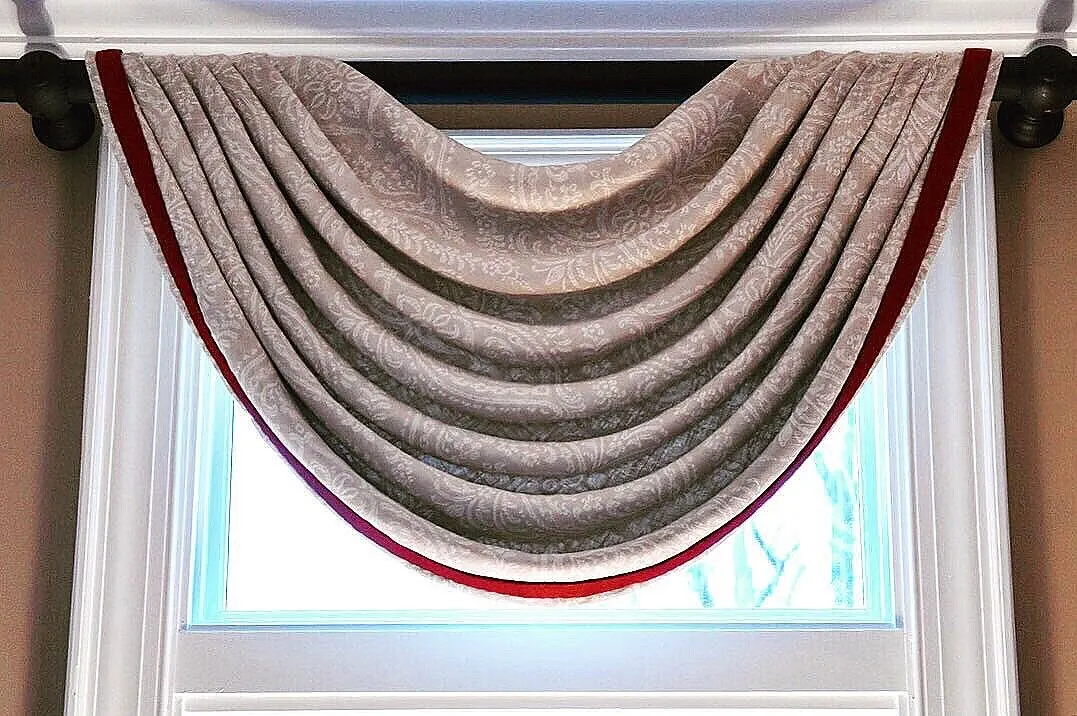
- Swag
- Fabric draped in a soft curve across the top of the window, typically interlined and finished with banding or fringe.
- Attached Valance
- A valance sewn directly onto the top of the drapery panels, creating a layered look in a single piece.
Mounting, hardware and proportion
Where and how a treatment is mounted shapes the apparent size of the window and how much light enters the room.
Read: How long should curtains be? A workroom's curtain length guide →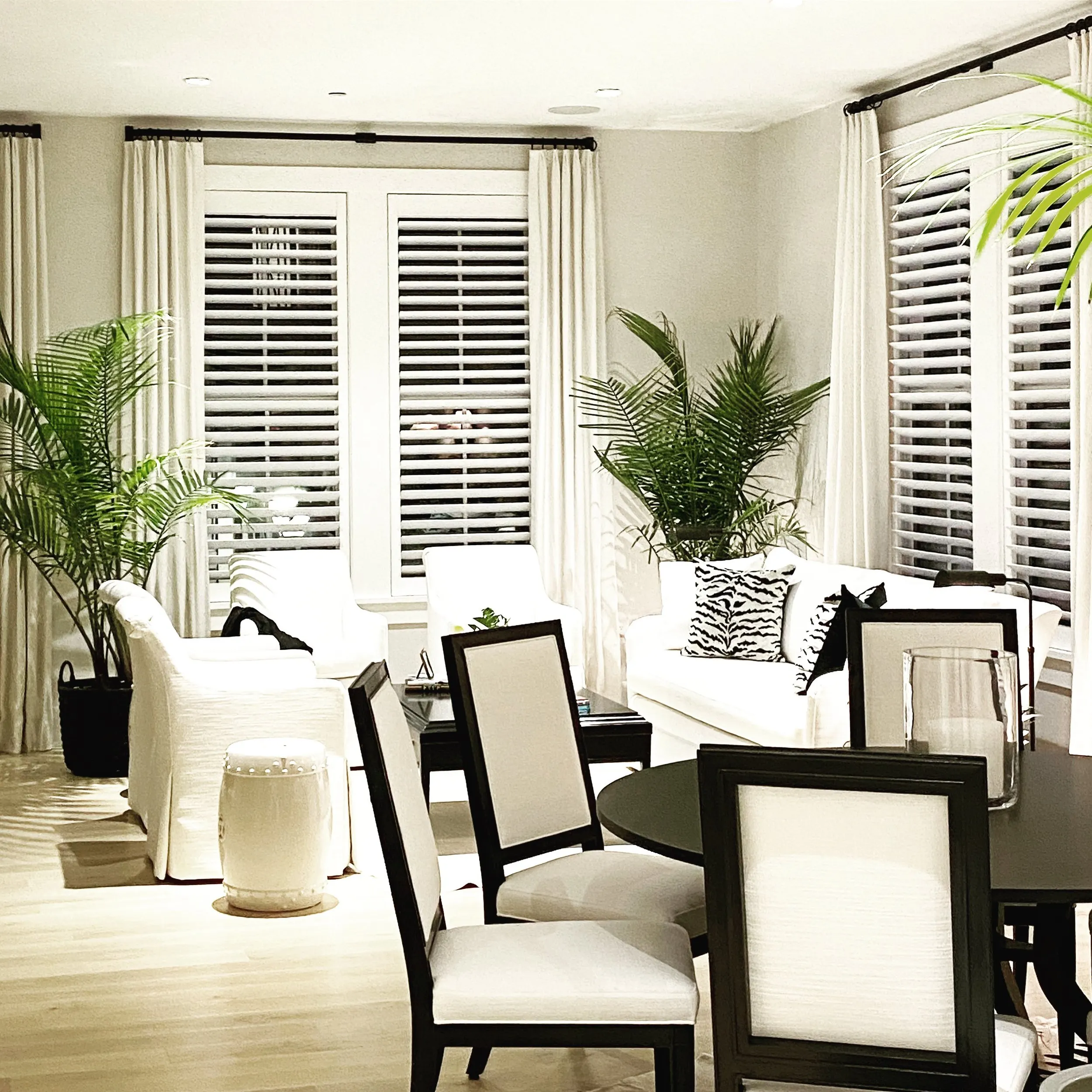
- Inside Mount
- The treatment sits within the window frame. It showcases the trim and suits deep windows, though a little light passes at the edges.
- Outside Mount
- The treatment is mounted on the wall or trim above and beyond the frame. It blocks more light and can make a window appear larger.
- Hanging High and Wide
- Mounting drapery hardware closer to the ceiling and extending it past the frame makes windows appear taller and allows panels to stack off the glass.
- Stackback
- The space the panels occupy when fully open. Planning for it keeps the glass, and the view, unobstructed.
- Leading Edge
- The vertical edge of a panel that meets the center of the window, and the ideal place for a contrast trim or banding.
- Return
- The part of the panel that wraps from the front of the rod back to the wall, blocking light at the sides. French return hardware achieves this with a curved rod end.
- H-Rail and Traverse Hardware
- Rail systems that allow panels to glide open and closed smoothly, often on concealed carriers.
Pillows, cushions and soft furnishings
The fabrics and trims chosen for the windows can carry through the room in pillows, cushions, bedding and table linens.
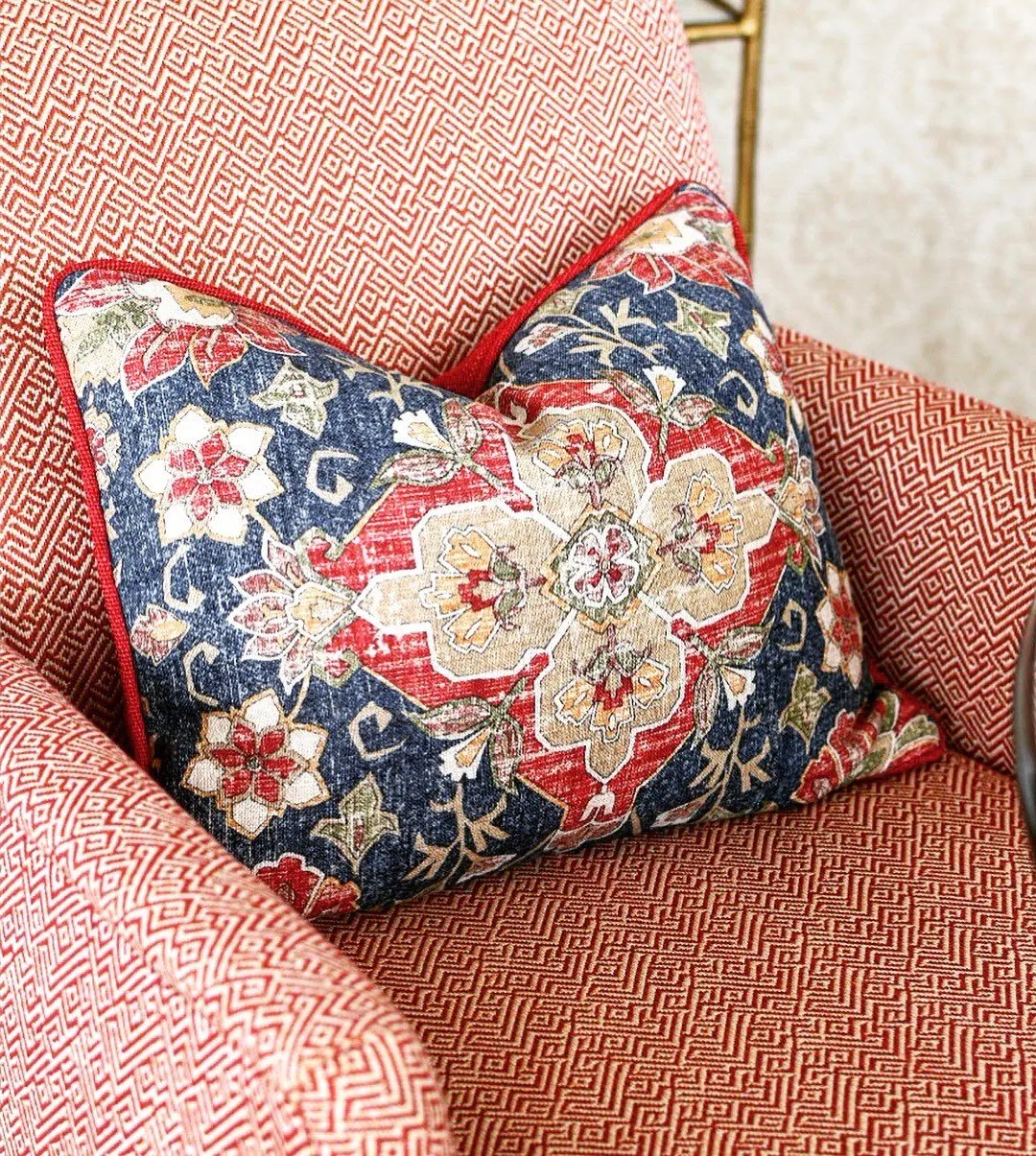
- Welt (Piping)
- A fabric-covered cord sewn into a seam. A contrast welt, or one matched to the upholstery, is a classic custom detail.
- Down and Feather Insert
- A pillow form filled with a down and feather blend. Plump and shapely, it fluffs back to life with ease.
- Bolster and Lumbar
- Long cylindrical and rectangular pillow shapes for beds, benches and sofas.
- Window Seat Cushion
- A cushion cut to the exact shape of a built-in bench, often finished with welting and layered with pillows.
FAQ
Common questions
Why choose custom window treatments over ready-made curtains?
Ready-made panels come in a few standard sizes and are rarely lined well. Custom treatments are measured to each window, made in the exact fabric you choose, and lined or interlined for the light control, drape and insulation each room needs. The result hangs better, lasts longer and is designed for the architecture of the house.
What affects the cost of custom draperies?
The main factors are the size and number of windows, the fabric (yardage and price per yard, and whether a pattern repeat needs extra yardage), lining and interlining, the pleat style and hand work, trims, the hardware or motorization, and installation. A designer can help you balance these so the budget goes where it shows most.
How do I choose between draperies and roman shades?
Draperies add height, softness and drama and can frame large windows and doors. Roman shades are tailored, sit within or just above the frame, and work well in kitchens, bathrooms, bedrooms and anywhere furniture sits in front of the window. Many rooms use both: roman shades for privacy and draperies for style.
What is the best window treatment for a bedroom?
For darkness, a blackout lined roman shade or drapery is best, ideally with interlined blackout construction to stop light bleed and an outside mount to block light at the edges. Layering a blackout shade with decorative draperies gives both function and softness.
Consultations by appointment
Ready for the real thing?
Your project begins with a private consultation in your home. We measure each window, listen to your vision, and bring curated fabrics, trims and hardware to evaluate in your own light.