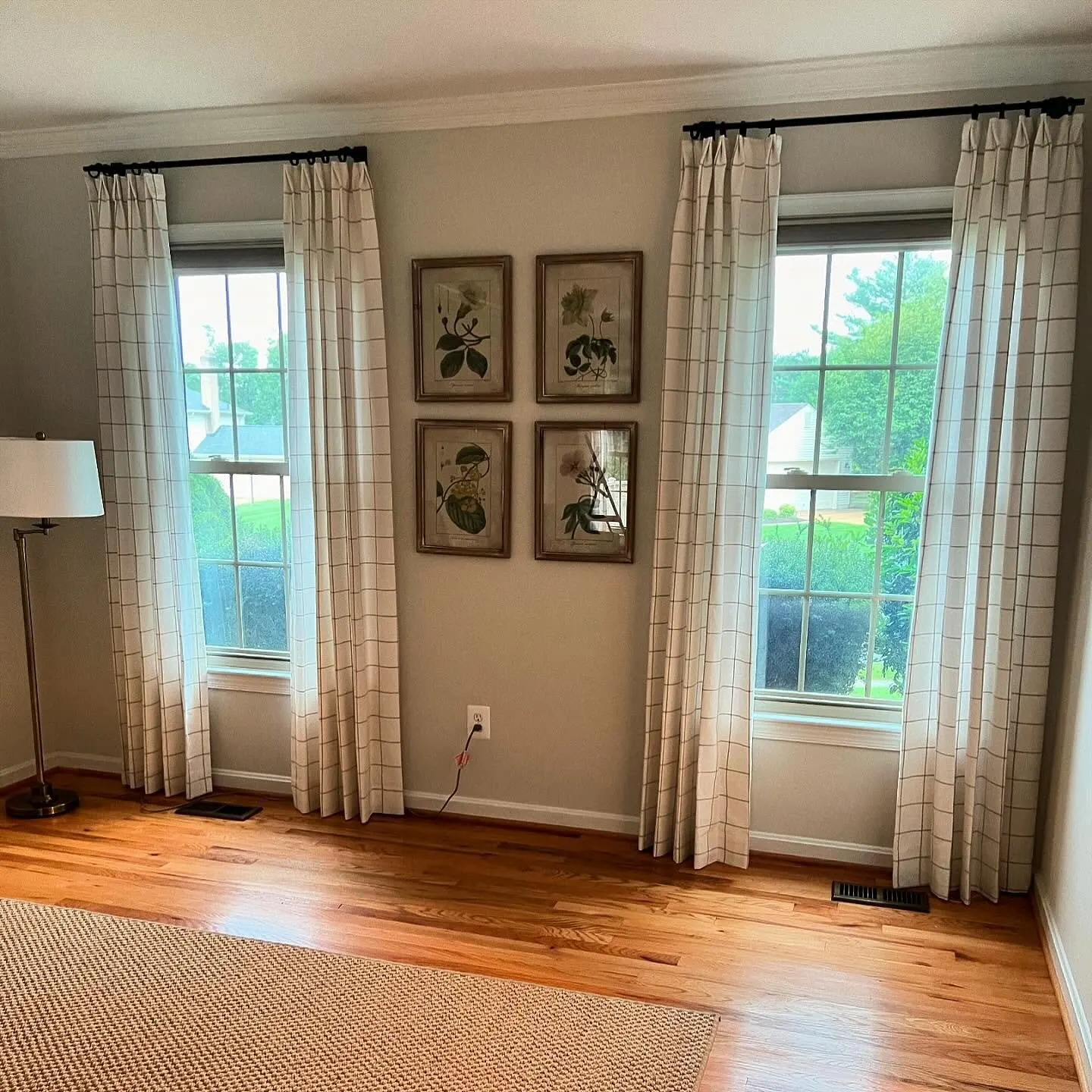
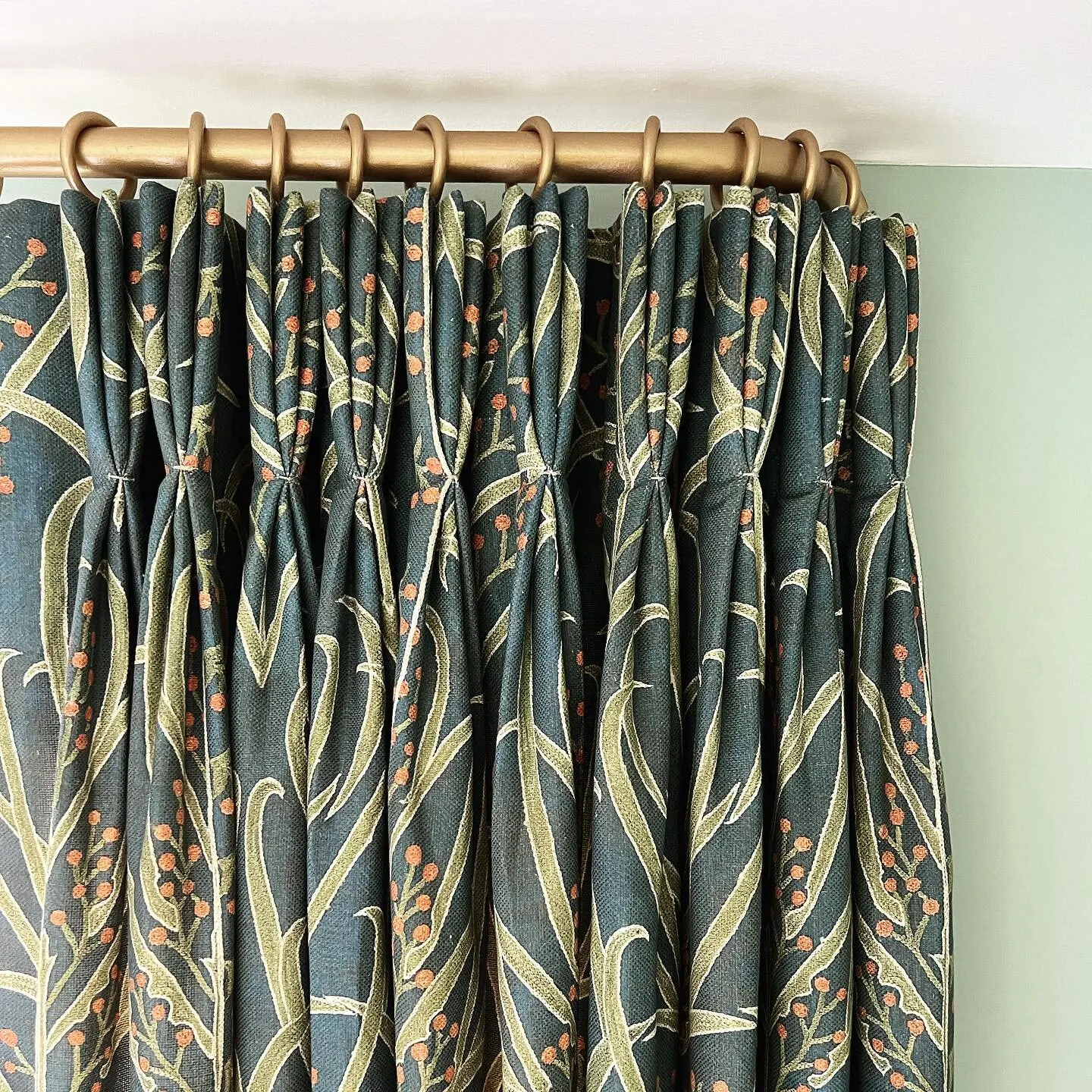
The pleat style, or heading, is the stitched top of a drapery panel. It decides how the fabric folds, how full the panel looks, how easily it opens and closes, and how much room it takes up when it is pushed aside. The main types are pinch pleats (double or triple, the triple usually called a French pleat), Euro pleats, inverted pleats, box pleats, goblet and cartridge pleats, ripplefold, pencil pleats, grommet, rod pocket and back tab. For most rooms the right choice comes down to three questions: how formal the room is, whether the panels will be drawn every day, and what the fabric is.
We make custom draperies in our workroom in Waterford, Virginia, and every photo in this guide is our own work. Below is each pleat style explained the way we explain it in a consultation, with what it looks like, how it behaves and where it works best.
Drapery pleat styles at a glance
Fullness is the width of flat fabric divided by the finished width of the panel. A panel that finishes at 50 inches wide with 2.5 times fullness starts as 125 inches of fabric. The ranges below are typical in custom work; sheers usually go to the top of the range or beyond. For how long the panels should be and how high to hang them, see our curtain length guide.
| Pleat | Look | Typical fullness | Hardware | Drawn daily? |
|---|---|---|---|---|
| French (triple pinch) | Formal, full, fanned at the top | 2 to 2.5x | Rings on a rod, or a traverse rod | Yes |
| Double pinch | Tailored, a little lighter | 2 to 2.5x | Rings on a rod, or a traverse rod | Yes |
| Euro (top tack) | Slim heading, folds open toward the hem | 2 to 2.5x | Rings or a track | Yes |
| Inverted | Flat, tailored face | 2 to 2.5x | Rings or a track | Now and then |
| Box | Crisp, structured folds on the face | 2.5 to 3x | Board, rings or a track | Mostly stationary |
| Goblet | Very formal, cupped tops | About 2.5x | Rings on a rod | Stationary |
| Cartridge | Round columns, architectural | 2 to 2.5x | Rings on a rod | Now and then |
| Ripplefold | Even, continuous waves | 60 to 120% | Ripplefold track | Yes, the smoothest |
| Pencil | Tightly gathered, casual | 2 to 2.5x | Hooks on a track or rings | Yes |
| Grommet | Deep, soft waves | 1.5 to 2x | Rod only | Yes |
| Rod pocket | Gathered on the rod | 2 to 3x | Rod through the pocket | No |
| Back tab | Soft folds, hidden tabs | 1.5 to 2x | Rod | Now and then |
The pinch pleat family
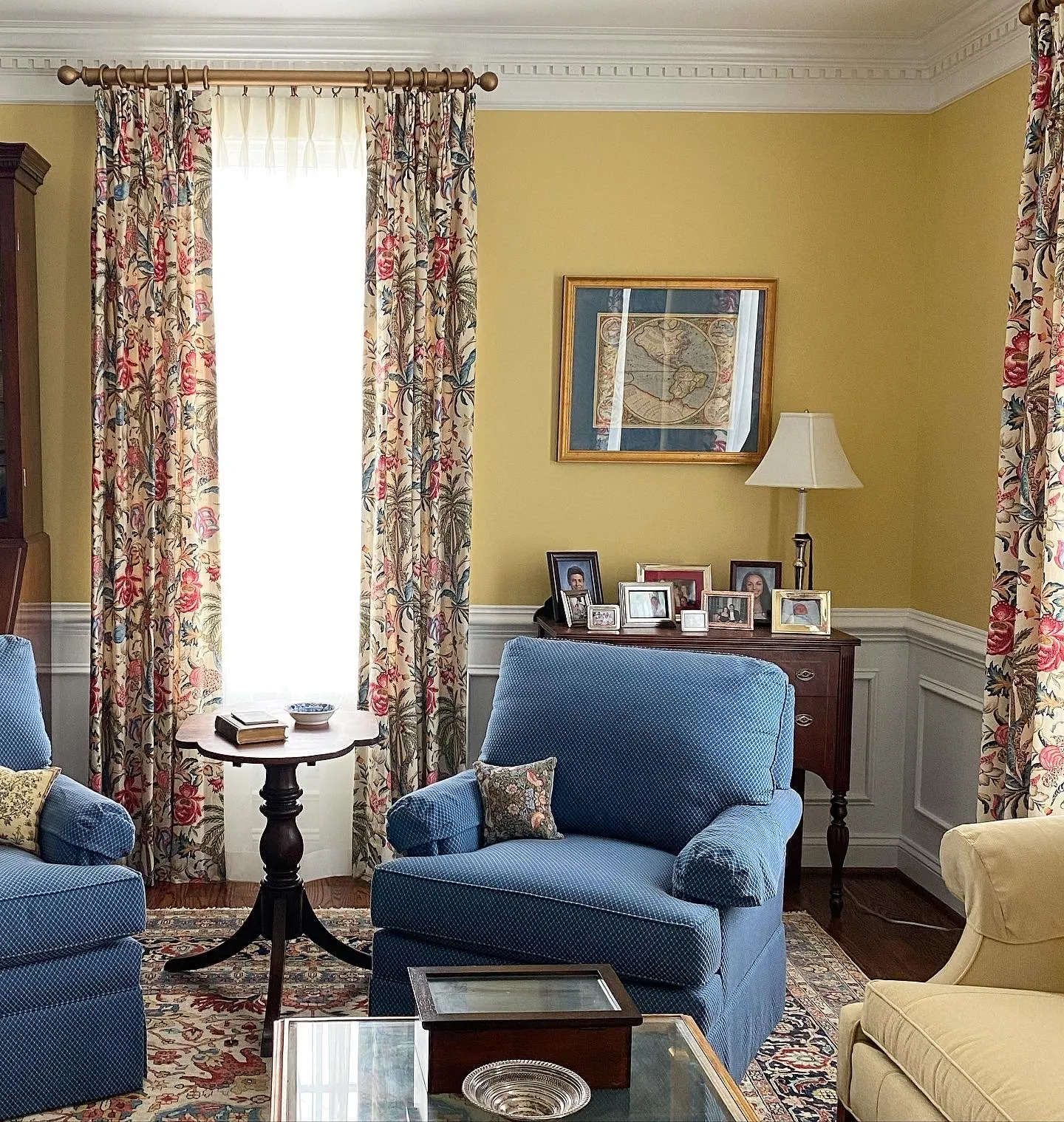
Pinch pleats are the backbone of custom drapery. Fabric is gathered into evenly spaced groups of folds, pinched together and tacked, with a stiff band of buckram inside the heading (usually about four inches deep) so the pleats stand up and keep their spacing. They work on decorative rods with rings and on traverse rods, they stack neatly when open, and they suit almost any room from formal to transitional.
French pleat (triple pinch pleat)
Three folds pinched at the base of the heading and fanned open at the top. It is the fullest and most formal pinch pleat, and the one most people picture when they think of custom draperies. It shines in living and dining rooms, with interlined fabrics, and on substantial hardware where the pleats can line up under each ring.
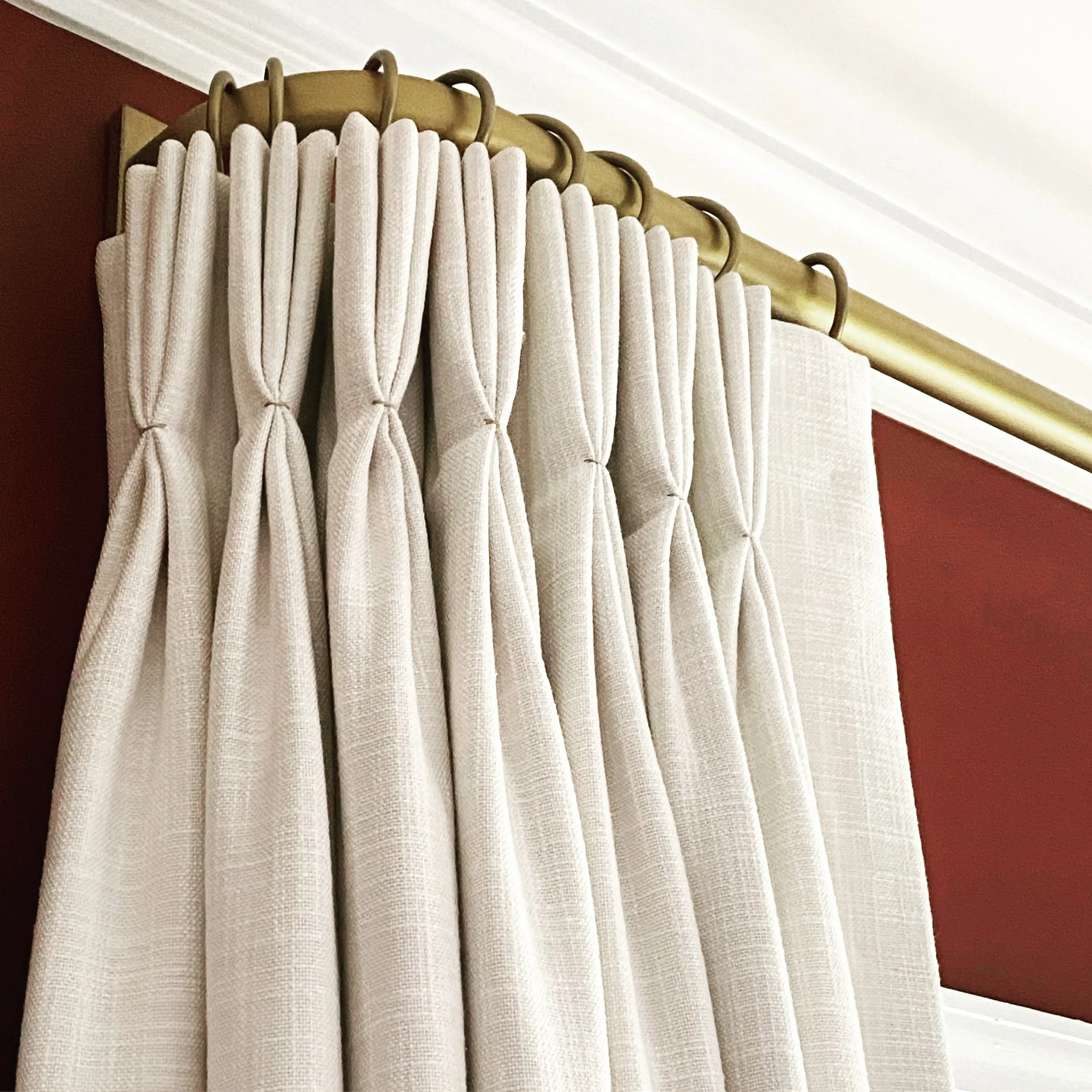
Double pinch pleat
Two folds instead of three. The heading is a little flatter and less bulky, which makes it a good choice for heavy fabrics such as velvet, for narrow panels where three folds would crowd each other, and for rooms that want a tailored look without full formality. The term “pinch pleat” on its own can mean two, three or even four folds, so it is worth asking which one a quote describes.
Euro pleat
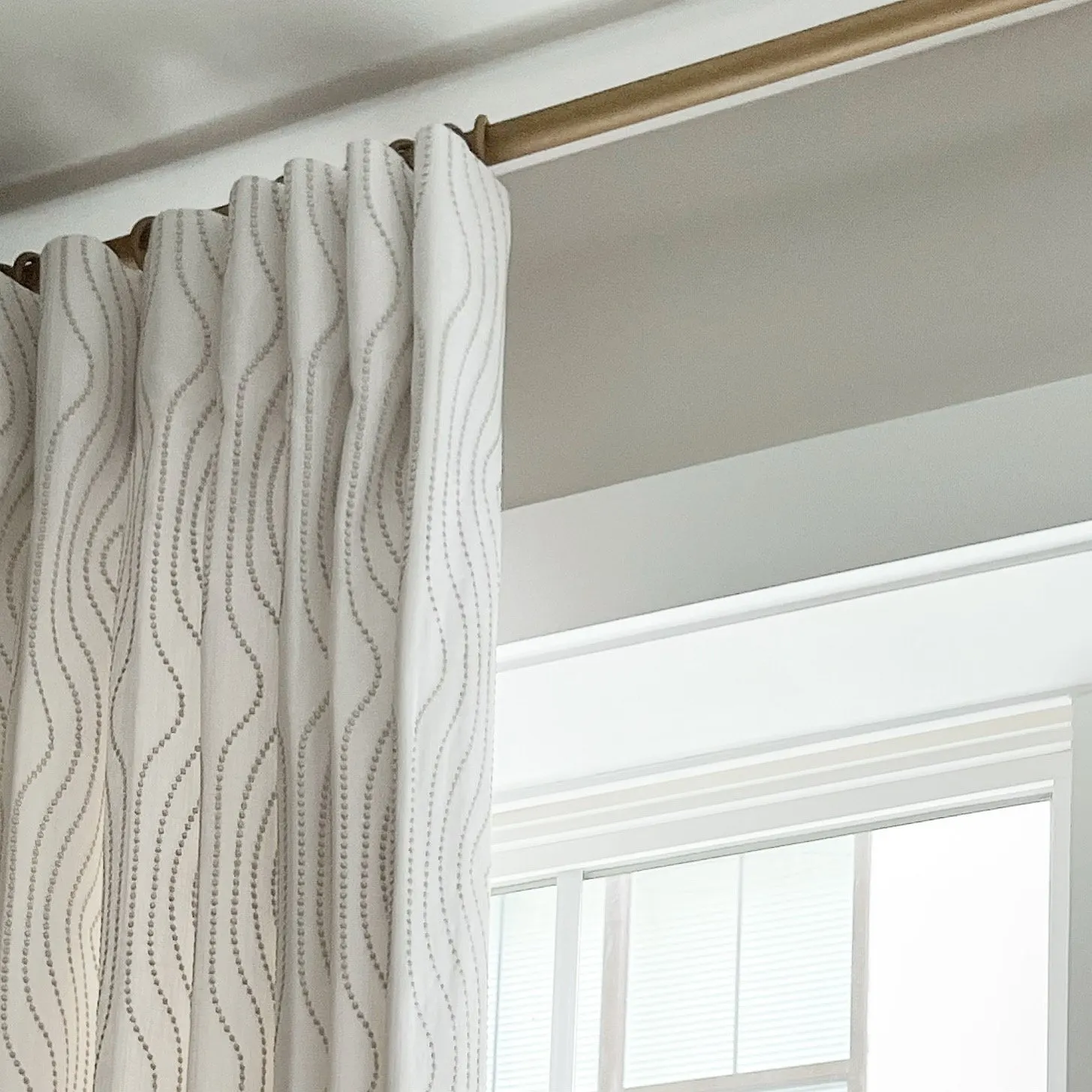
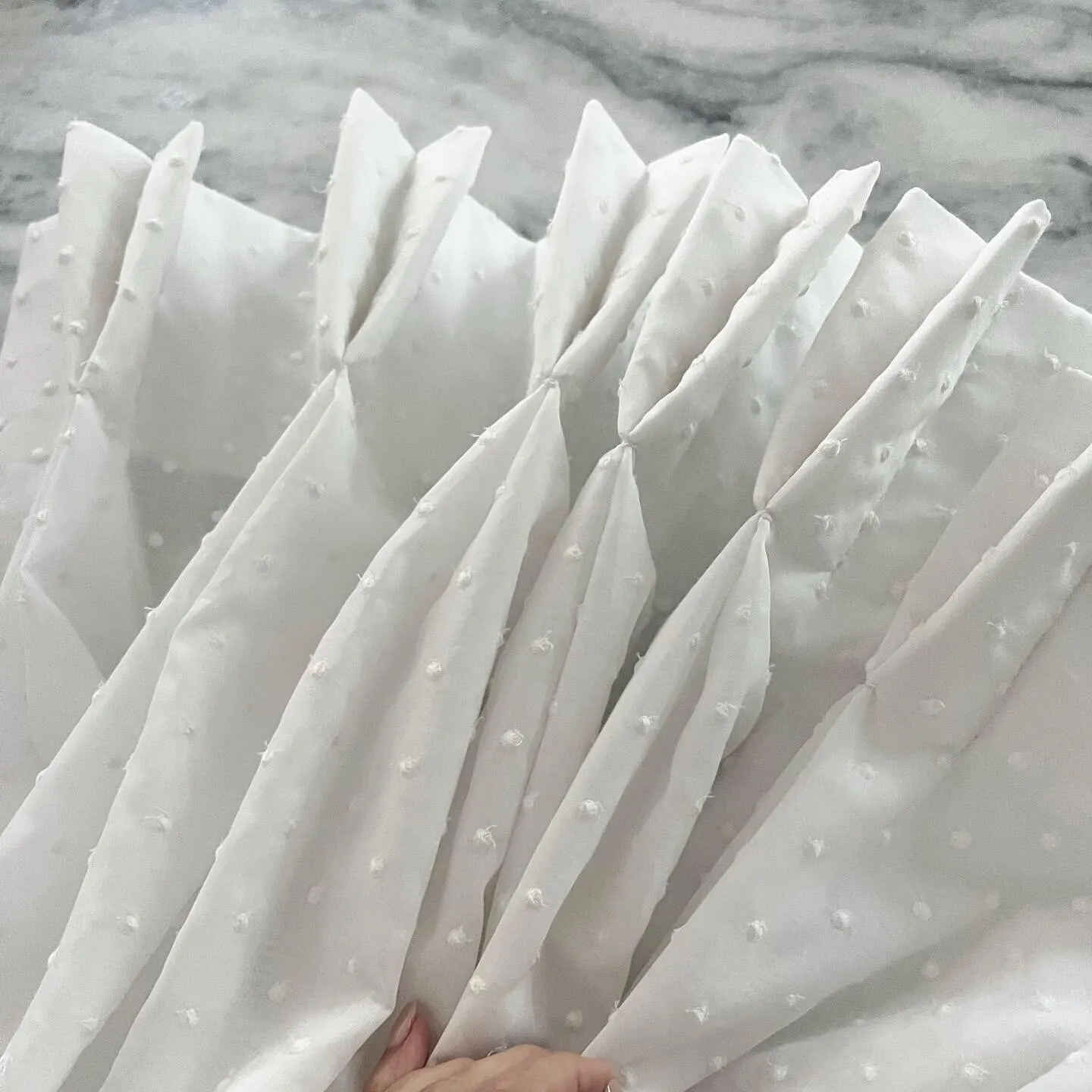
A Euro pleat, sometimes called a top tack or Parisian pleat, is a pinch pleat tacked at the very top edge instead of at the base. The heading stays slim and clean, and the folds open gradually downward toward the hem. It keeps the order of a pinch pleat with a more relaxed, contemporary fall, and it pairs especially well with linen and with slender iron or brass hardware.
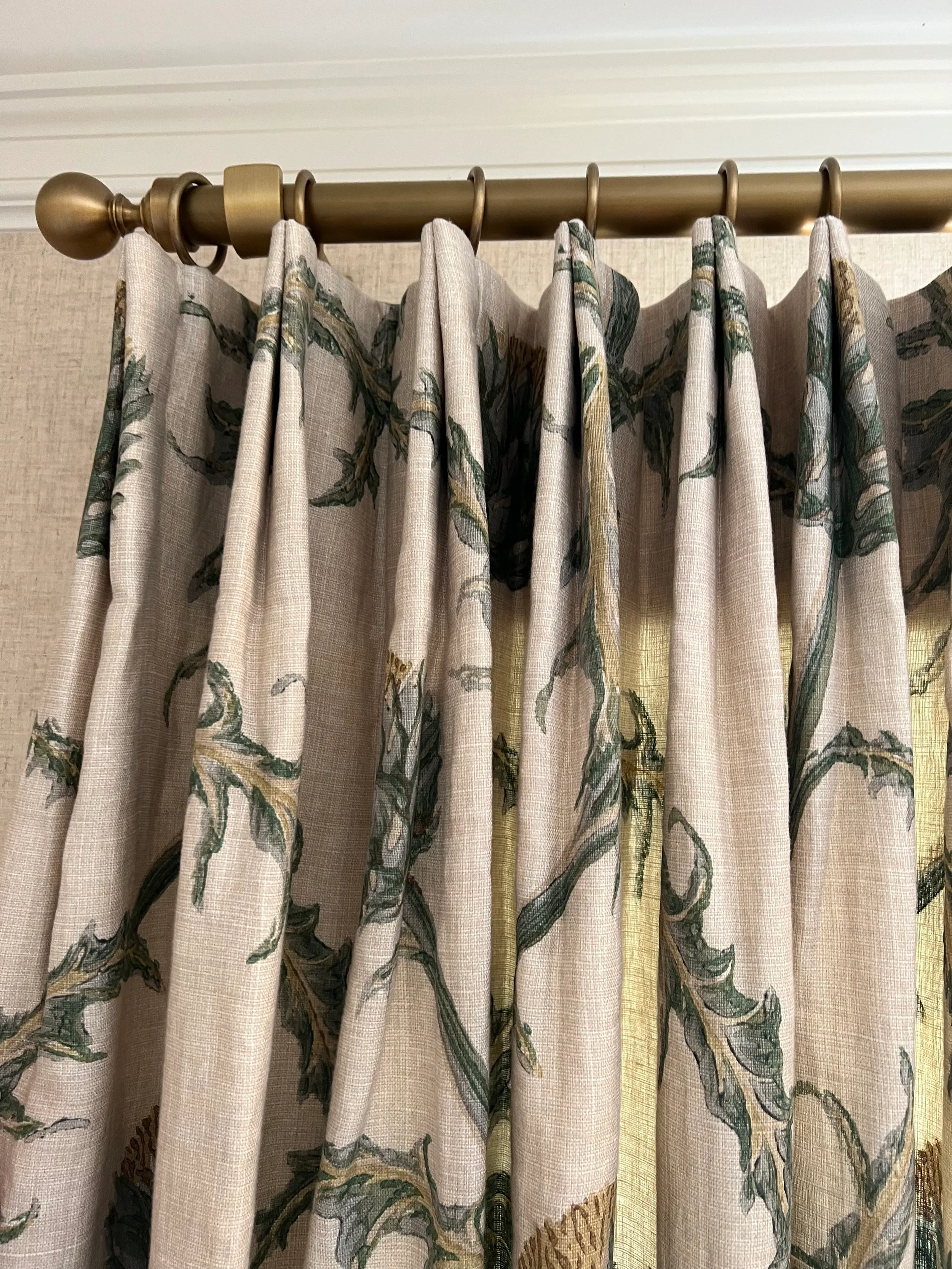
Tailored and structured pleats
Inverted pleat
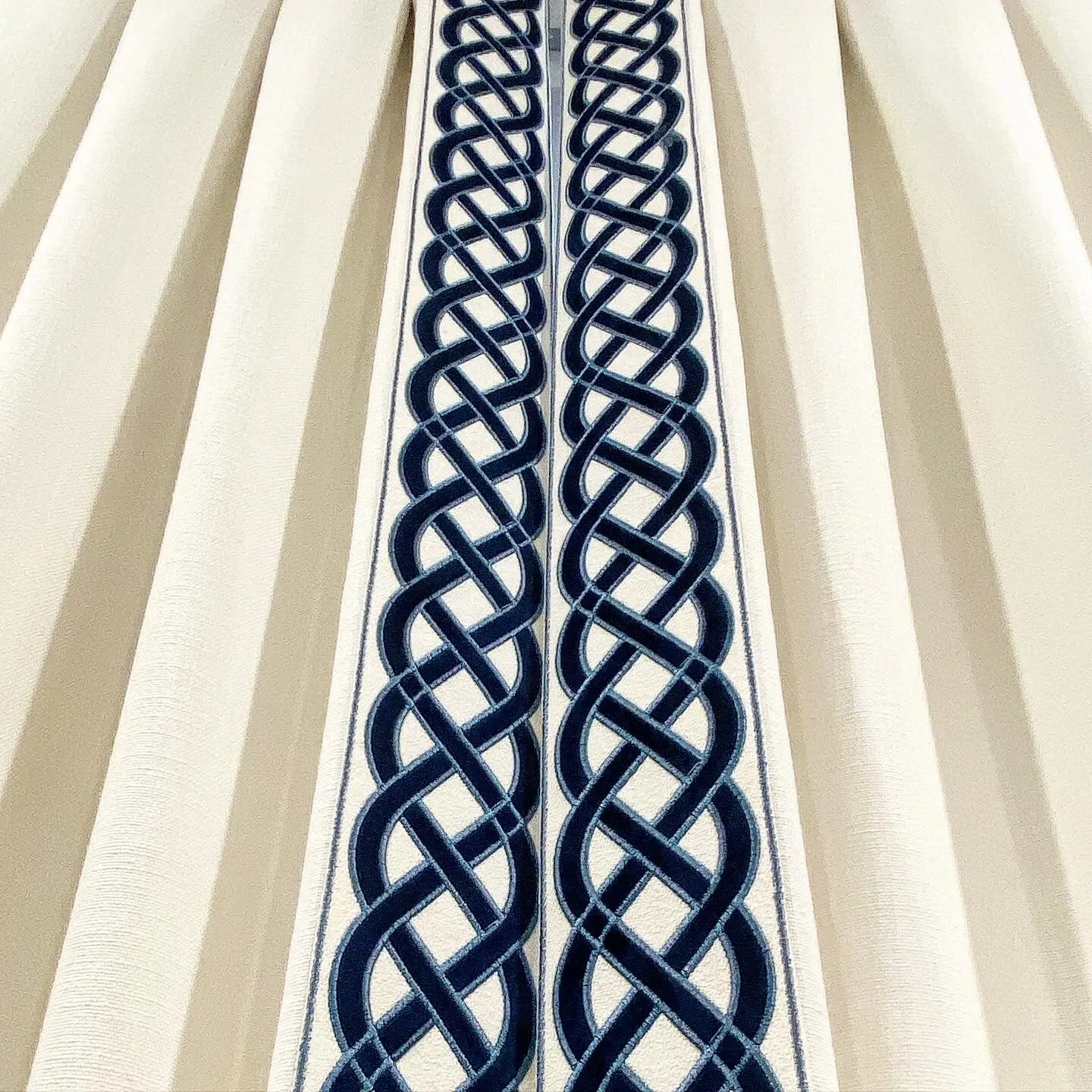
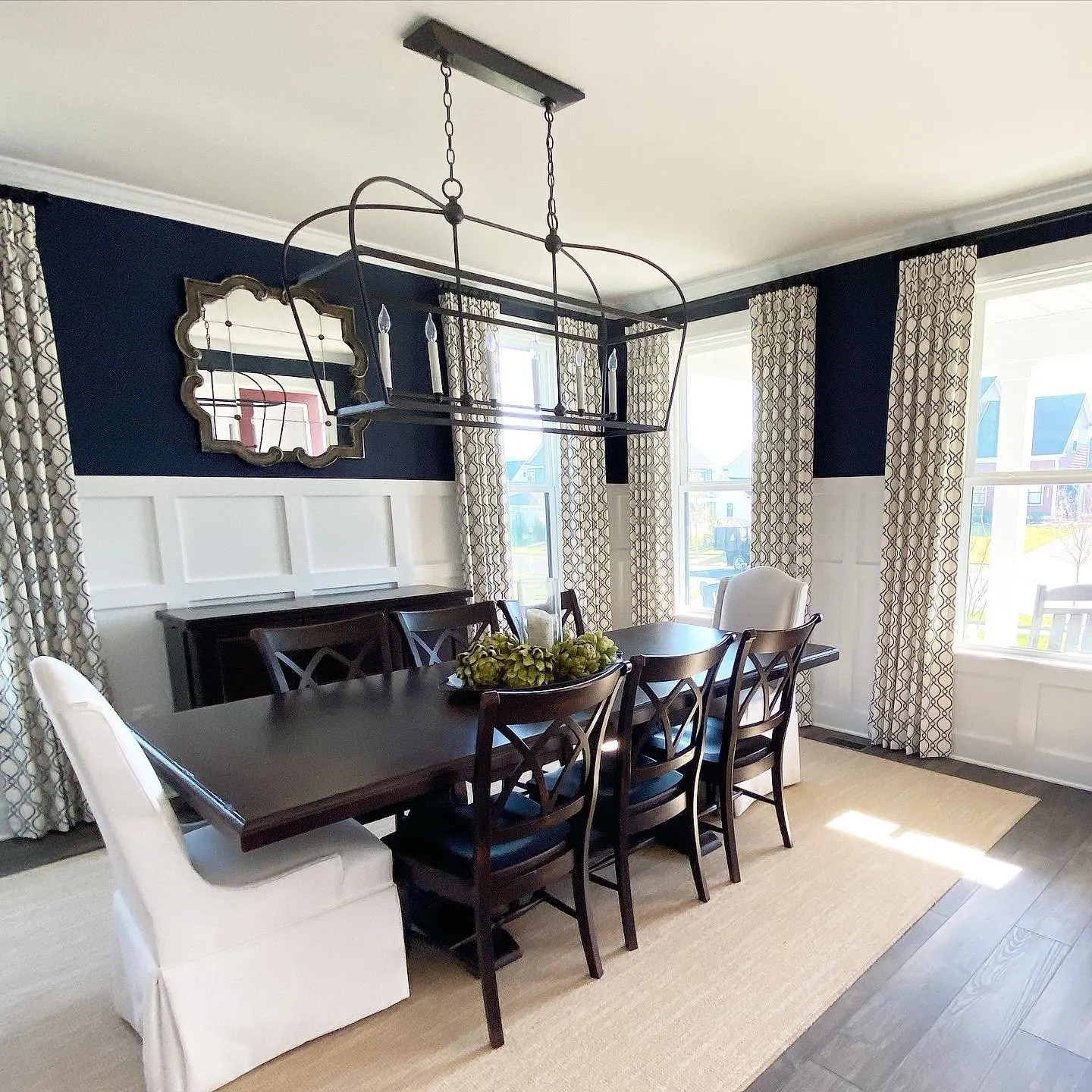
The fold turns to the back of the panel, leaving a flat, smooth face broken only by a crisp vertical line at each pleat. Inverted pleats look calm and architectural, they suit modern and transitional rooms, and they are the best canvas for a leading edge trim because nothing on the face competes with the banding. They read most beautifully when the panel hangs fairly flat, so they are ideal for side panels that stay mostly in place or are drawn now and then.
Box pleat
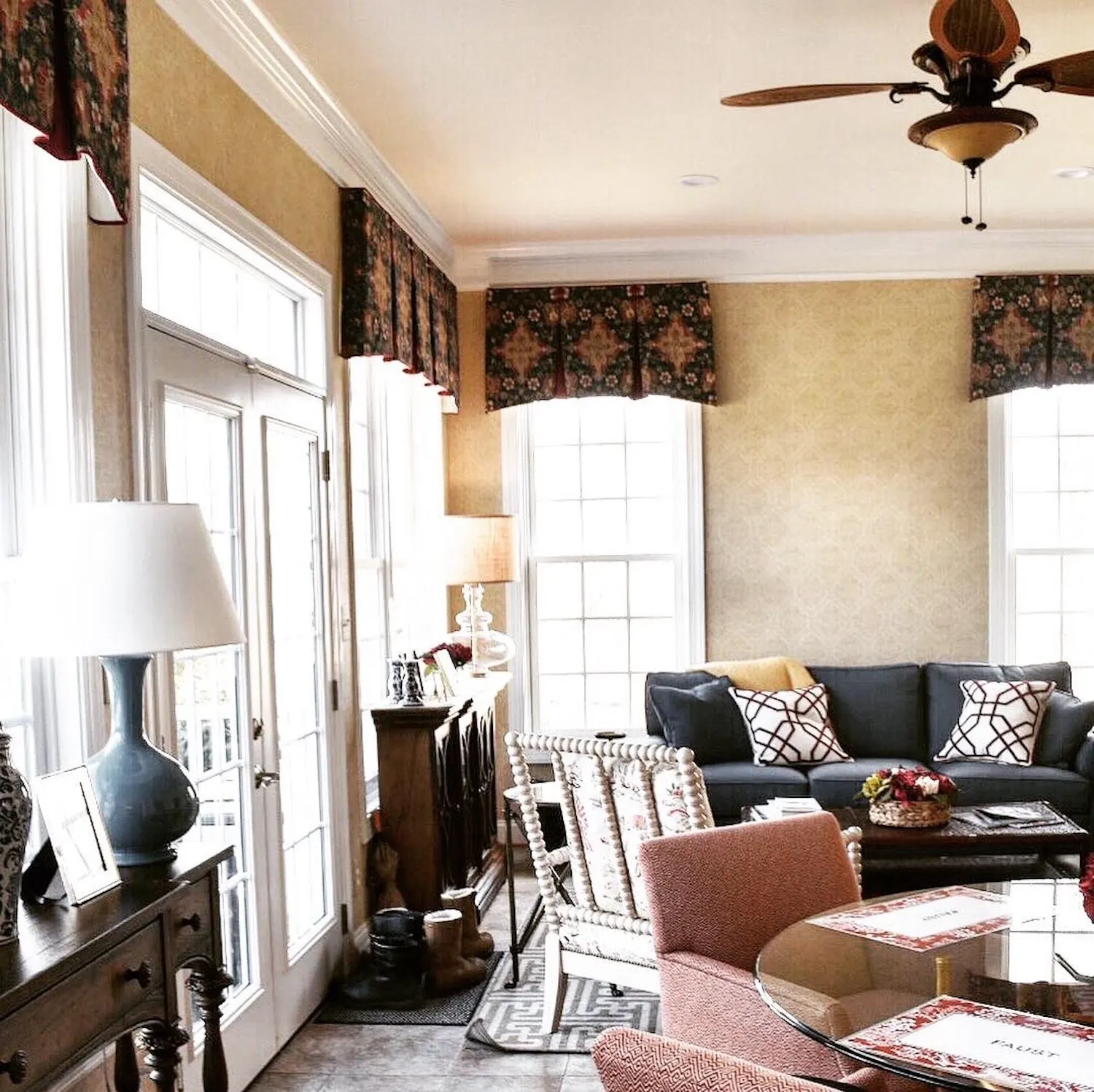
A box pleat is the mirror image of an inverted pleat: the folds face outward on the front and meet behind, so each pleat forms a raised, squared panel. Box pleats use a lot of fabric when the pleats touch, and they are more common on valances, bed skirts and cushions than on full length draperies. A box pleated valance over a shade or stationary panels is one of the most tailored top treatments there is; see our cornices and valances.
Goblet pleat
A goblet pleat is a cylinder of fabric pinched at the base, with the top rounded into a cup and filled with batting or tissue so it holds its shape. It is the most formal heading of all, often finished with a button, a covered cord or a contrast welt at the base. Goblets crush when they are pushed together, so they belong on stationary panels, usually framing a window with tiebacks or simply standing at the sides.
Cartridge pleat
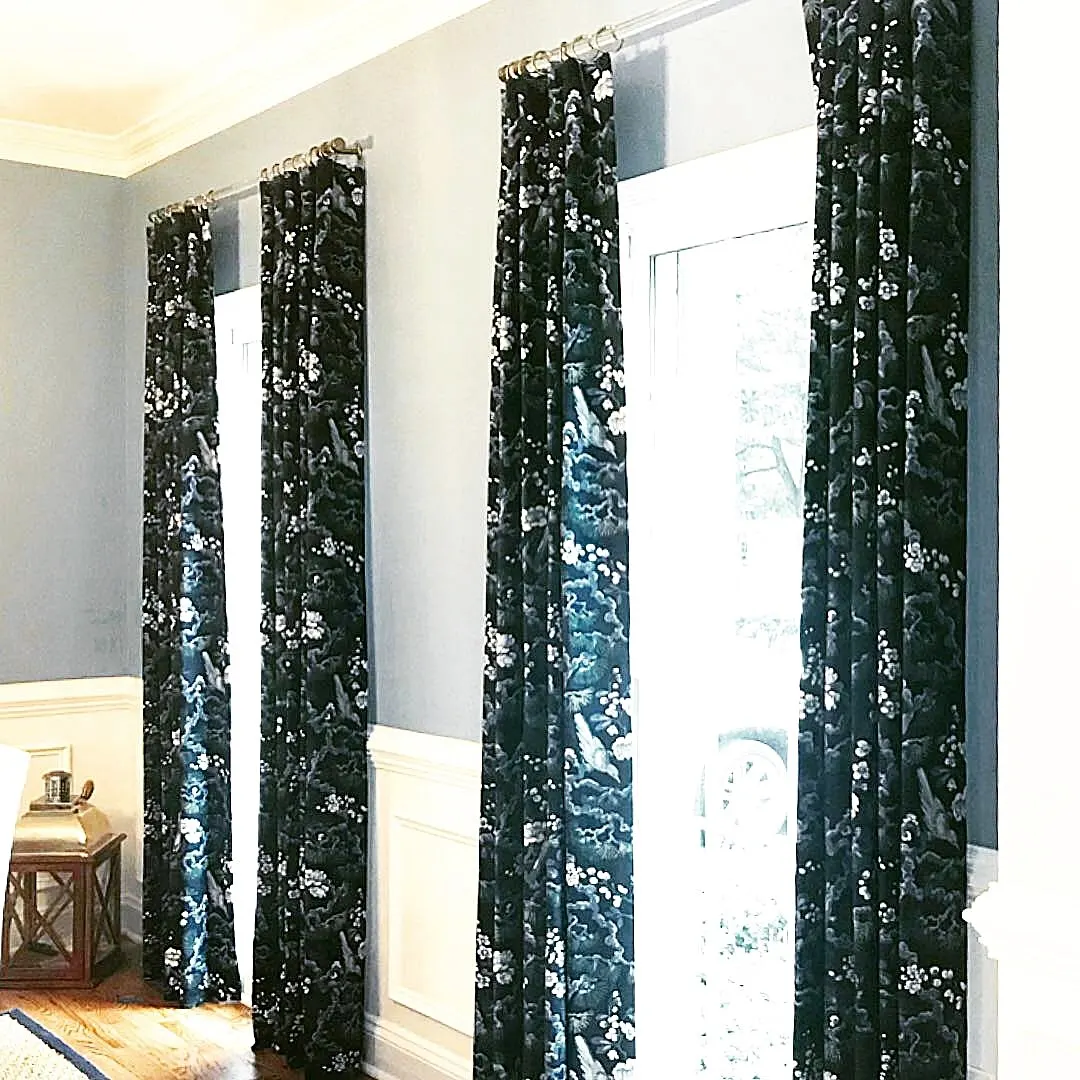
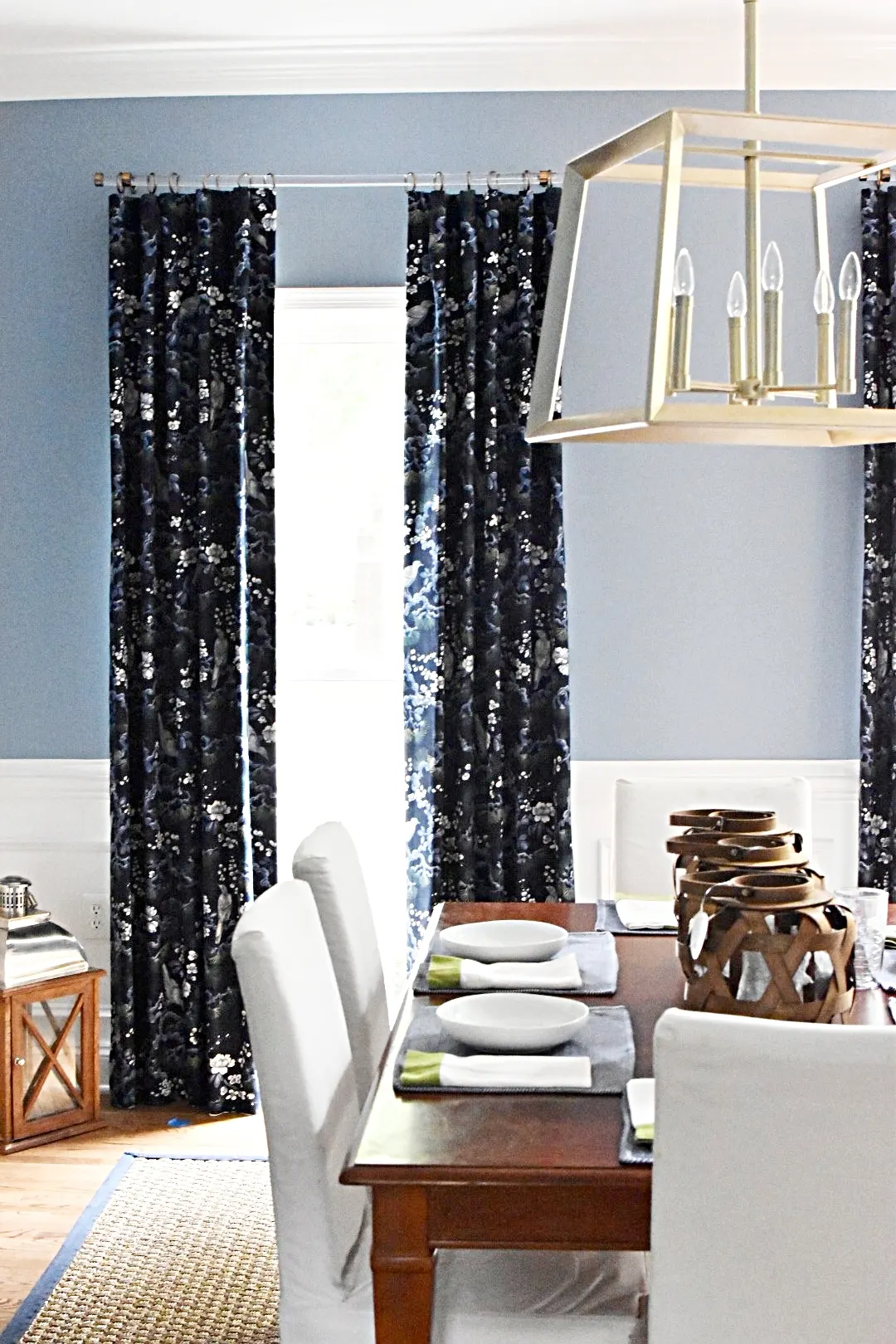
Like a goblet without the pinch: a round, column-like fold, sometimes lightly stuffed to keep its shape. Cartridge pleats give a crisp, even rhythm that suits both classic and modern rooms, and they look striking on bold prints and on acrylic or metal rods. The first panels below were made with the French blackout method, which we explain further down.
Soft and casual headings
Ripplefold
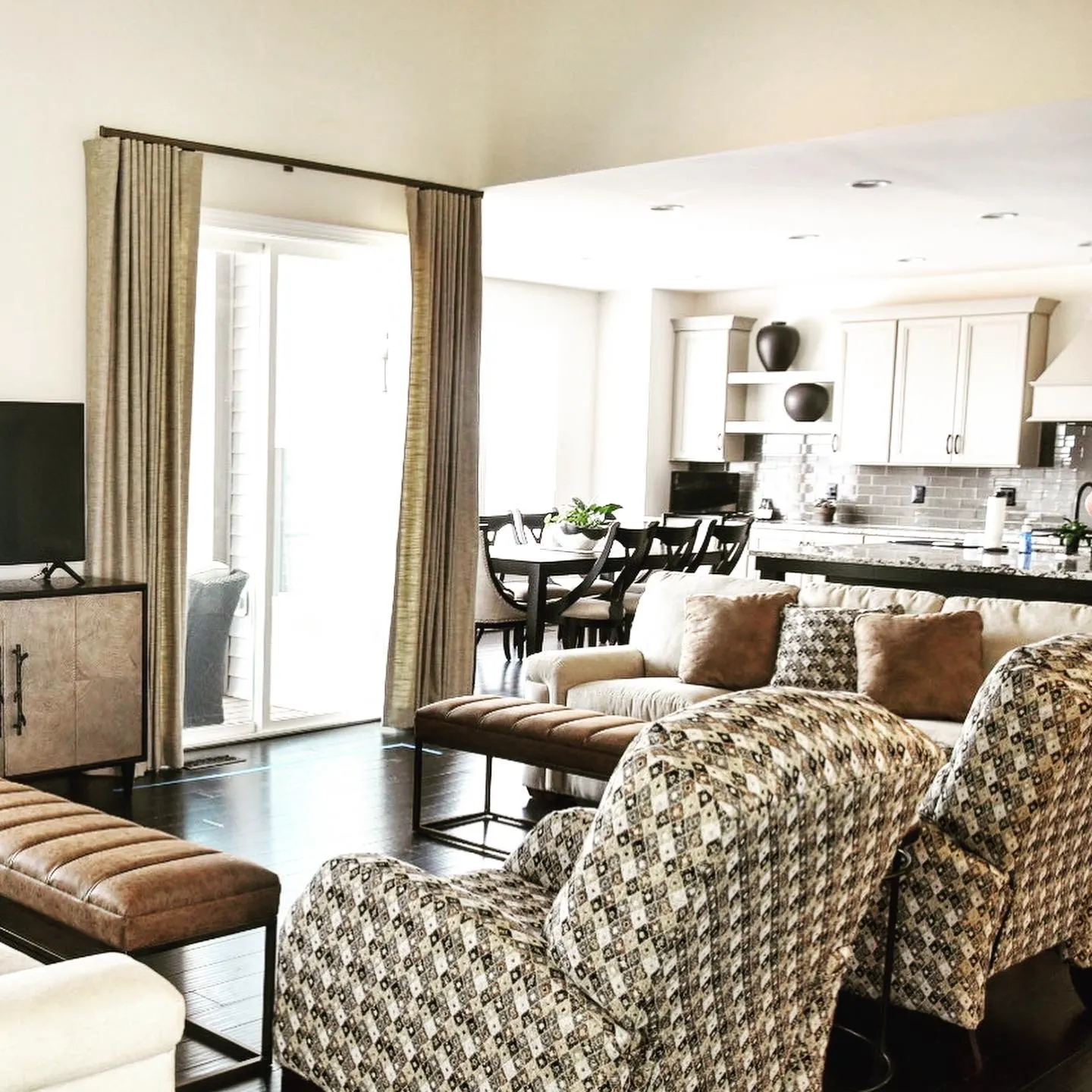
Ripplefold, also called wave or S-fold, has no sewn pleats at all. A flat heading carries a snap tape that clicks onto evenly spaced carriers in a dedicated track, so the fabric falls in continuous, identical waves on both sides of the track. Fullness is specified as a percentage, typically 60, 80, 100 or 120 percent, with more fullness giving deeper waves. Ripplefold stacks the tightest of any heading, glides with almost no effort, and is the easiest heading to motorize, which makes it the natural choice for modern rooms, wide windows and sliding doors.
Pencil pleat
A gathering tape sewn across the top is drawn up with cords into tight, narrow folds that look like a row of pencils. Pencil pleats are relaxed and adaptable, popular in cottage and English country rooms, and they hang from hooks on a track or rings. They are softer and less structured than a buckram pinch pleat.
Grommet
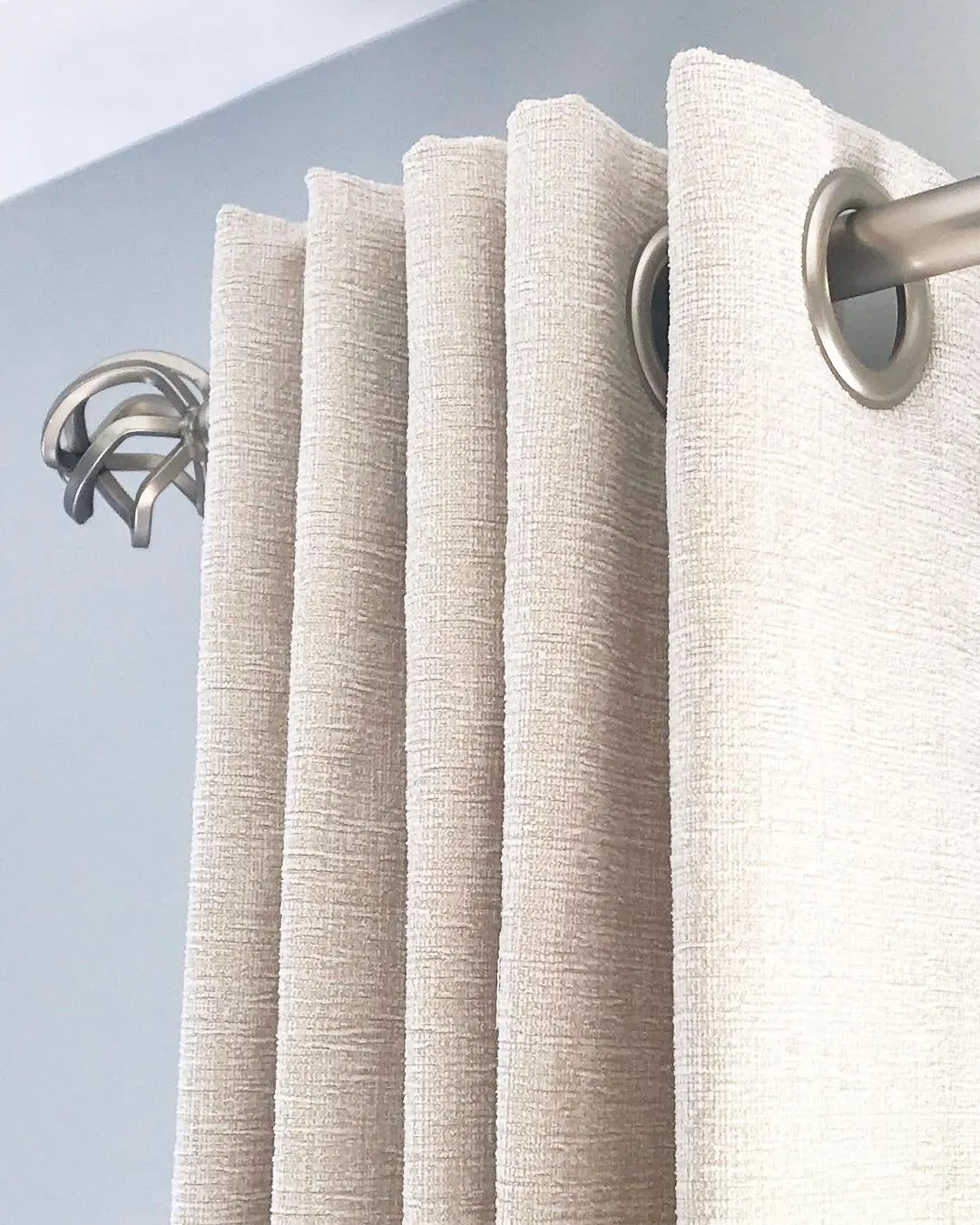
Metal rings set into the heading slide straight onto a rod, so the fabric falls in deep, soft waves and draws easily. Grommets are casual and practical, and they show the rod above the panel. One limit worth knowing: grommets cannot pass a center support bracket, so on a long rod they need a single span or hardware designed around the bracket.
Rod pocket
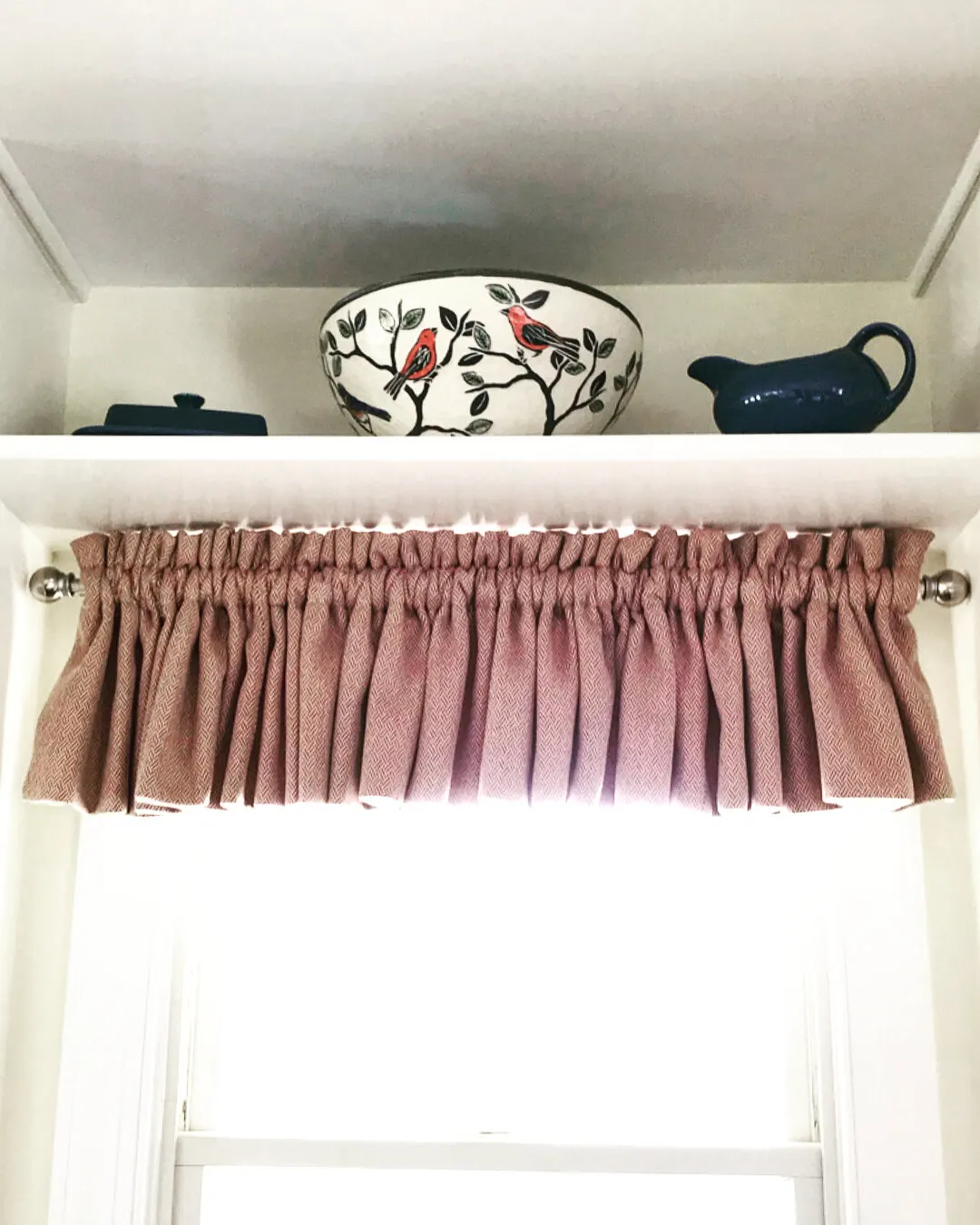
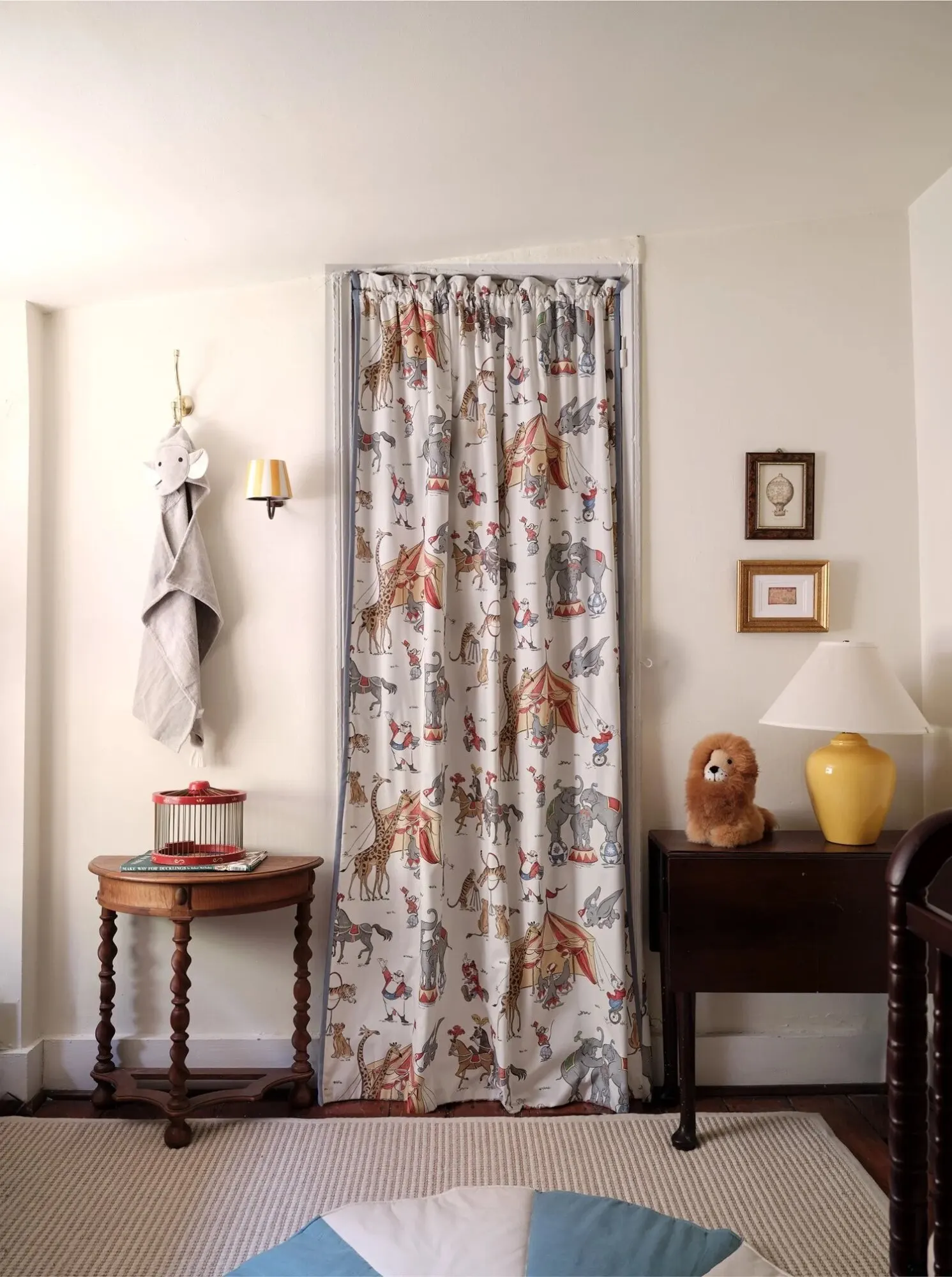
A sewn channel at the top slides over the rod and gathers the fabric along it, often with a small ruffled header above. Rod pocket panels are meant to stay put, since the gathers resist sliding, so they suit café curtains, valances, doors, sidelights and panels that will be tied back. They are also a sweet, soft choice for nurseries and kitchens.
Back tab and tab top
Tab top panels hang from visible loops of fabric. Back tab panels hide the loops behind the heading, so the front looks like a simple flat top that falls into soft folds. Both are casual and are best for panels that are not drawn often.
The comparisons people ask about most
Pinch pleat vs French pleat
They are the same family. “French pleat” almost always means a triple pinch pleat, while “pinch pleat” covers two, three or four folds. If you want the fullest, most formal version, ask for a triple.
Pinch pleat vs Euro pleat
The difference is where the tack sits. Tacked at the base, the folds fan out above it for a traditional look. Tacked at the top, the heading stays slim and the folds open toward the floor for a cleaner, more contemporary look. Both use similar fullness and both draw well.
Pinch pleat vs ripplefold
Structure against flow. Pinch pleats have defined folds held by buckram, hang from rings on a decorative rod or from a traverse rod, and suit traditional and transitional rooms. Ripplefold has no pleats, needs its own track, stacks tighter, glides more easily and motorizes more simply, and it suits modern rooms and large expanses of glass. If you love a decorative rod and finials, choose pinch pleats; if you want the window to disappear behind clean, even waves, choose ripplefold.
Inverted pleat vs box pleat
Mirror images. An inverted pleat hides its folds behind a flat face; a box pleat shows its folds on the face as raised, squared panels. On draperies, inverted pleats are far more common. On valances and bed skirts, box pleats are the classic.
Choosing a pleat for your fabric
- Linen: pinch or Euro pleats, ideally interlined. Interlining gives linen body so the pleats hold and the folds fall full. Linen can lengthen or shorten slightly as humidity changes, so plan the hem with that in mind.
- Velvet and heavy wovens: double pinch or inverted pleats keep the heading from getting bulky. A triple pleat in thick velvet can push the panel away from the wall.
- Silk: pinch or goblet pleats, always lined and usually interlined, which supports the fabric and protects it from the sun.
- Sheers: ripplefold or pinch pleats at generous fullness. Thin fabric needs more of itself to look rich, and a sheer at low fullness looks skimpy.
- Large prints: any sewn pleat can be pleated to pattern, which means the pleats are placed so the motif falls in the same position on every panel and lines up across the window.
Choosing a pleat for how you will use it
- Panels you open and close every day: pinch pleats, Euro pleats or ripplefold, on a traverse rod, a track or rings that slide freely.
- Stationary side panels: any heading works, and this is where goblet, cartridge, inverted and box pleats shine. Stationary panels are framing the window rather than covering it, so they can be narrower.
- Sliding doors and wide windows: ripplefold on a track, or pinch pleats on a traverse rod. Extend the hardware past the opening so the panels stack off the glass and the door stays clear; our curtain length guide covers how far.
- Motorized draperies: ripplefold or pinch pleats on a motorized track.
- Long rods with center brackets: grommets and ordinary rings stop at a bracket. Use a traverse rod, a track, or rings made to pass over the bracket.
- Bedrooms and media rooms: pick the pleat for looks, then add blackout lining or the French blackout method, and use an outside mount with returns to block light at the sides. See lining, interlining and blackout and mounting and hardware.
What makes a custom pleat hold its shape for decades
The heading style is only half of it. What separates a pleat that stays crisp for twenty years from one that slumps in a season is how it is built.
- Buckram in the heading. A stiff band inside the top of the panel keeps every pinch, Euro and goblet pleat upright and evenly spaced.
- Interlining. A soft flannel layer between the face fabric and the lining gives the panel weight, so pleats form fuller, rounder folds and the fabric is protected. It is our choice for formal rooms and for silks and linens.
- Hand tacking. Each pleat is finished by hand rather than by machine, for softer, more precise folds and stitches that do not show. In our workroom, French, Euro and cartridge pleats are hand-tacked.
- The French blackout method. Blackout lining paired with interlining blocks the light while keeping a soft hand, free of the stiff, shiny back of coated blackout alone.
- Even spacing across a pair. Pleats are laid out so the spaces between them match across both panels and land under the rings or carriers, so the pair looks like one composition when closed.
- Dressing at installation. Once hung, the panels are dressed into their folds and steamed so they hang beautifully from the first day.
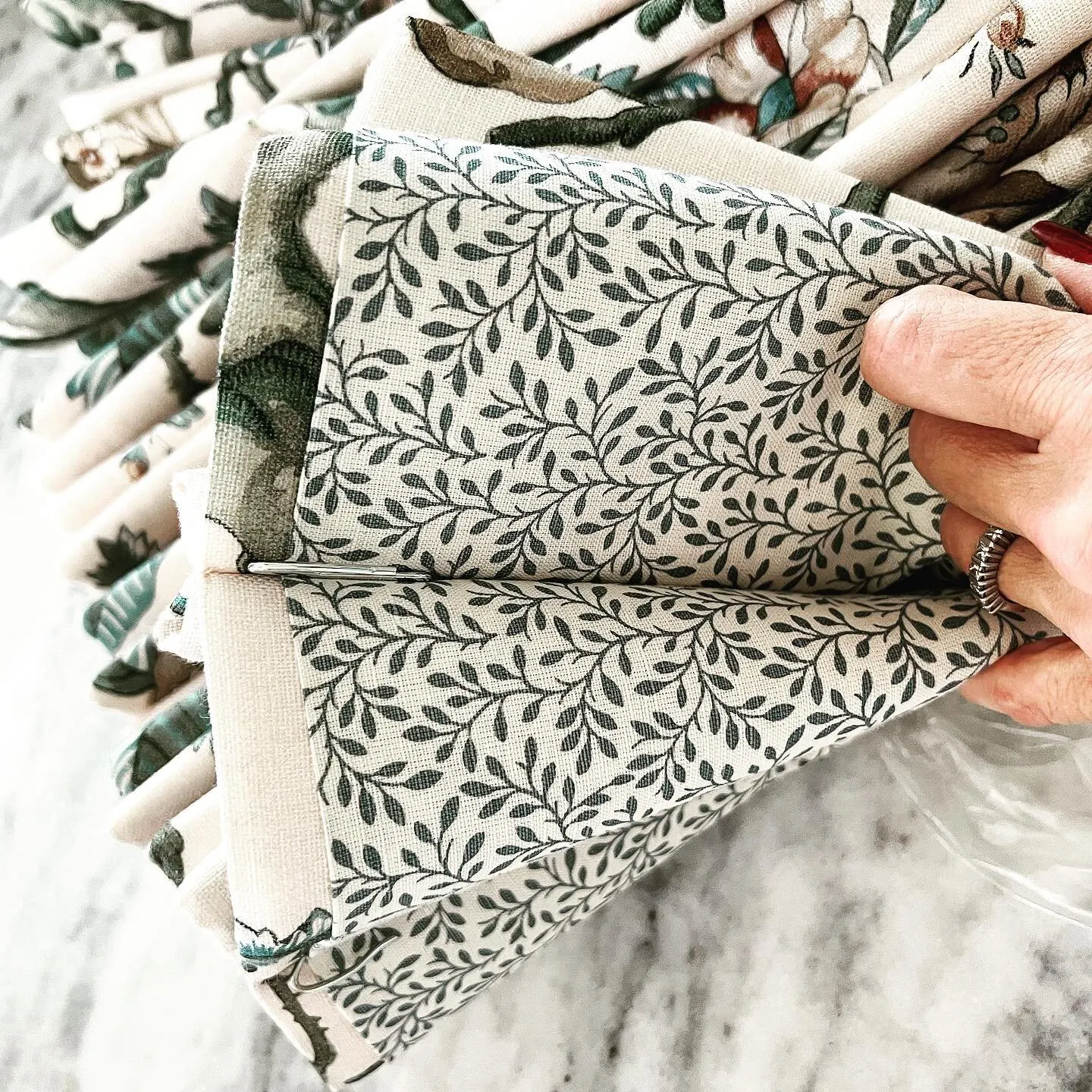
How we help you choose
In a consultation we look at the room, the windows and how you live there, then bring a curated selection of fabrics, trims and hardware to see in your own light. If you have a photo you love, bring it: the pleat in that photo is a fine starting point, and we adjust it to the fabric and the way the panels will be used. We make custom draperies for homes across Loudoun County, Northern Virginia and Maryland, and we work with interior designers to the trade. When you are ready, book a design consultation.